Geomembrane damage is one of the most common and costly issues that can occur during the construction of containment systems. While geomembranes are engineered to provide durable, low-permeability barriers, their long-term performance depends heavily on careful installation, site control, protection, and verification. Even a small puncture, tear, wrinkle, abrasion, or seam-related imperfection can create a pathway for leakage if it is not identified and repaired before the system is placed into service.
Construction sites are active, demanding environments. Heavy equipment, sharp aggregate, foot traffic, tools, weather exposure, welding operations, and adjacent construction activities can all contribute to defects in a geomembrane. Because many holes are too small to see during a visual inspection, relying on appearance alone can leave owners, engineers, and contractors exposed to unnecessary risk.
Understanding how construction-related defects occur is the first step toward reducing leakage risk and improving containment performance. Electrical Leak Location Surveys are a proven method for locating holes and other imperfections after installation, helping project teams verify the condition of the geomembrane before final cover materials are placed or the system becomes operational.
Why Geomembranes Are Vulnerable During Construction
Geomembranes are designed to withstand demanding service environments, but the construction phase often presents some of the highest risks they will face. During installation, the material is exposed, handled, moved, welded, walked on, tested, covered, and sometimes reworked. Each of these activities introduces opportunities for damage.
Common construction-phase risks include:
- Sharp stones or debris beneath the liner
- Equipment contact during deployment or backfilling
- Dragging panels across rough subgrade
- Dropped tools or welding equipment
- Excessive foot traffic
- Poorly prepared subgrade surfaces
- Improper placement of drainage aggregate
- Wind uplift during deployment
- Tension, folds, or stress points in the liner
- Damage during anchor trench work
- Seaming and repair errors
Because geomembranes often serve as the primary containment barrier, defects that occur during construction can have serious consequences. In landfills, ponds, mining facilities, wastewater lagoons, tank farms, canals, and industrial containment systems, holes may allow liquids to migrate beyond the intended containment area. This can lead to regulatory concerns, environmental exposure, repair costs, operational delays, and reputational risk.
Common Types of Construction-Related Defects
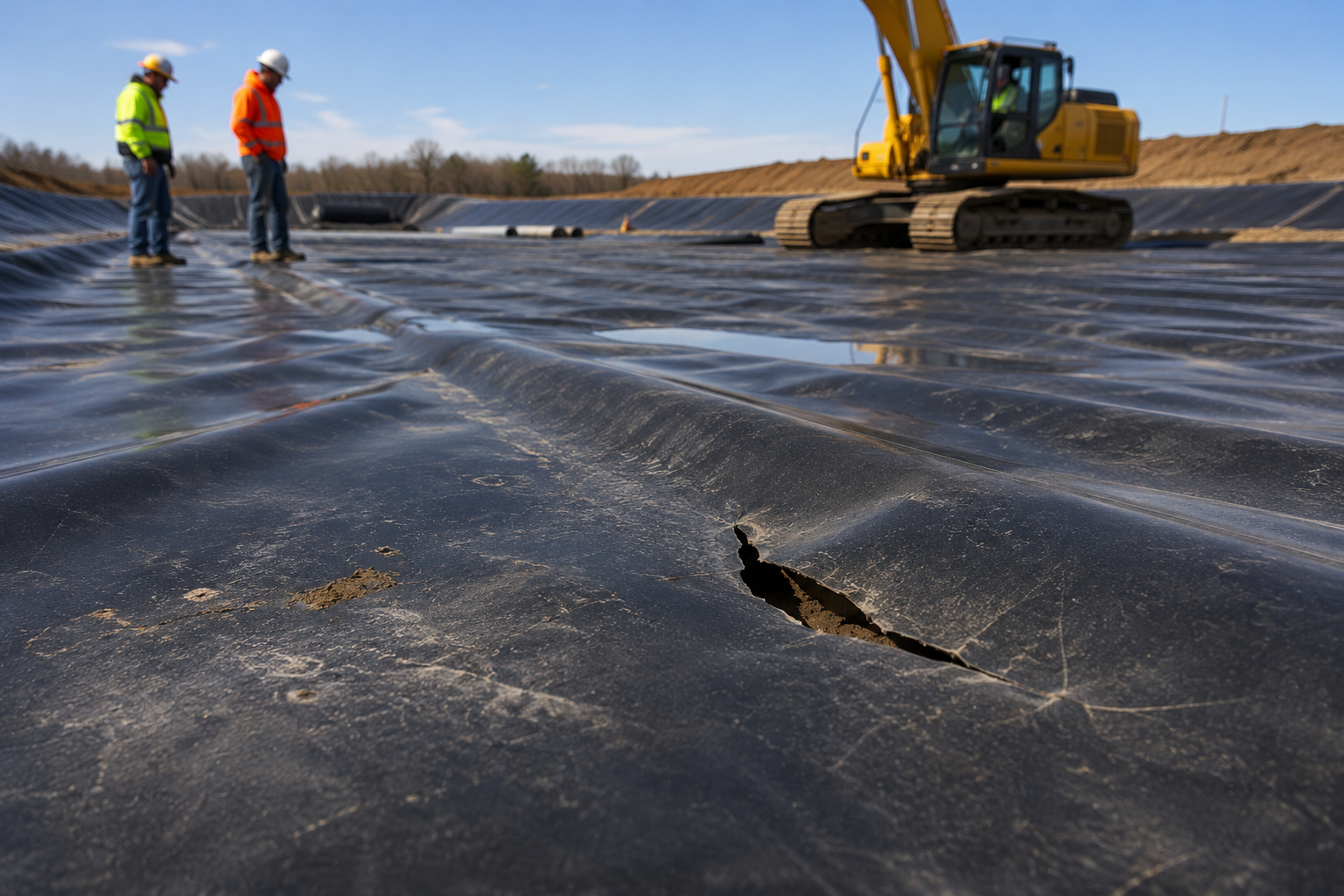
Construction damage can take many forms. Some imperfections are obvious, while others are nearly invisible without specialized testing. The most common types include punctures, tears, abrasions, cuts, seam defects, stress cracking, and holes caused by installation activities.
Punctures
Punctures are among the most frequent forms of construction-related geomembrane defects. They often occur when the liner is pressed against sharp stones, sticks, construction debris, or angular drainage aggregate. Punctures may also result from boot traffic, hand tools, equipment tracks, or materials dropped onto the liner.
Small punctures can be difficult to detect visually, especially when they are located beneath wrinkles, under cover soil, or near seams. Even pinhole-sized openings can compromise containment performance if liquid reaches the defect.
Tears and Cuts
Tears and cuts are typically caused by mechanical contact. Examples include dragging panels across rough ground, contact with machinery, mishandling during deployment, or sharp edges on construction materials. Cuts can also occur when workers use knives or other tools near the geomembrane during trimming, seaming, or packaging removal.
Longer tears are usually easier to see, but small cuts may blend into surface texture or appear insignificant during a visual review. If overlooked, they can expand under stress or become leakage pathways once the system is filled.
Abrasions
Abrasions occur when the surface of the geomembrane is scraped, rubbed, or worn. This may happen when panels are dragged across subgrade, when aggregate is placed too aggressively, or when equipment moves near exposed liner areas. Abrasion may not always create an immediate hole, but it can reduce material thickness and increase susceptibility to future defects.
In some cases, abrasion weakens the liner enough that a small stress point develops into a more serious defect after loading, settlement, or thermal movement.
Seam Defects
Field seams are critical areas because they join separate geomembrane panels together. Seam defects may result from poor welding conditions, improper equipment settings, contamination, wrinkles, moisture, dust, inadequate surface preparation, or operator error.
Potential seam-related imperfections include:
- Voids
- Fishmouths
- Burn-through areas
- Cold welds
- Incomplete fusion
- Wrinkles trapped in the seam
- Contaminated weld zones
- Poorly executed repairs
Quality assurance and destructive or nondestructive seam testing help reduce these risks, but electrical surveys can provide an additional layer of verification by identifying holes that may not be detected through standard methods alone.
Damage from Cover Material Placement
Many geomembrane systems are covered with soil, geotextile, gravel, drainage media, protective layers, or ballast. The cover placement stage is a major source of construction damage. Equipment may push material across the liner, angular particles may puncture the surface, or insufficient cover thickness may allow machinery pressure to transfer directly to the geomembrane.
Careful placement techniques are essential. Cover materials should be placed in controlled lifts, with equipment operating only where adequate protection exists. Even with good practices, however, hidden holes may still occur during covering operations.
How Heavy Equipment Can Create Holes
Heavy equipment is often necessary for earthwork, grading, cover placement, and project completion. However, loaders, dozers, excavators, trucks, and compactors can create significant risk when working near exposed geomembranes.
Equipment-related defects may occur when:
- Tracks or tires travel too close to exposed liner
- Operators push aggregate across the surface
- Buckets scrape or strike the geomembrane
- Equipment turns sharply on thin cover layers
- Excessive ground pressure transfers through cover material
- Sharp debris is pressed into the liner
Even when equipment never directly touches the liner, pressure from machinery can force angular particles into the geomembrane. This is especially concerning when protective soil layers are too thin, uneven, or poorly graded.
To reduce equipment-related holes, contractors should follow project specifications closely, maintain proper cover thickness, use approved access routes, and avoid sudden starts, stops, or turns over lined areas.
The Role of Subgrade Preparation
The subgrade is the foundation beneath the geomembrane. If it is not properly prepared, defects can form before the liner is even placed into service. A well-prepared subgrade should be smooth, stable, compacted, and free of sharp objects, roots, stones, debris, and sudden grade changes.
Poor subgrade conditions can contribute to:
- Punctures from stones or debris
- Stress points from uneven surfaces
- Wrinkles caused by poor grading
- Bridging over voids or depressions
- Settlement-related strain
- Damage during deployment
Subgrade approval should occur before geomembrane deployment. However, conditions can change quickly on a construction site. Wind, rain, traffic, erosion, and ongoing work can introduce debris or surface irregularities after initial preparation. Continuous attention is needed throughout installation.
Weather and Environmental Factors During Installation
Weather can also influence the likelihood of construction-related imperfections. Temperature changes cause geomembranes to expand and contract. Wind can lift panels, move debris, or make deployment more difficult. Rain can soften the subgrade, introduce moisture into seams, and create unstable working conditions.
Key weather-related concerns include:
- Thermal expansion and contraction
- Wrinkle formation
- Wind uplift
- Moisture in weld areas
- Subgrade softening
- Reduced visibility during inspection
- Delays that expose the liner for longer periods
Extreme temperatures can also affect welding quality. Installers must monitor equipment settings, material temperature, ambient conditions, and seam performance throughout the work. Good documentation and consistent quality control help reduce the risk of defects caused by changing environmental conditions.
Why Visual Inspection Alone Is Not Enough
Visual inspection is an important part of geomembrane quality assurance, but it has limitations. Many construction-related holes are small, hidden, or difficult to see. Some may be located beneath wrinkles, under temporary cover, near seams, or in areas with surface texture. Others may be obscured by dust, moisture, shadows, or installation markings.
Visual review may miss:
- Pinholes
- Small punctures
- Fine cuts
- Holes beneath wrinkles
- Defects near seams
- Damage under thin cover material
- Imperfections caused during backfilling
- Small abrasions that have become openings
Because the consequences of undetected holes can be significant, owners and engineers often rely on Electrical Leak Location Surveys to supplement standard quality assurance procedures. These surveys are designed to identify holes that may not be visible to the naked eye.
How Electrical Leak Location Surveys Help
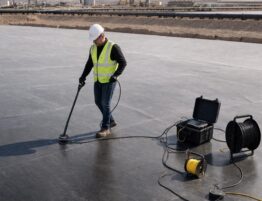
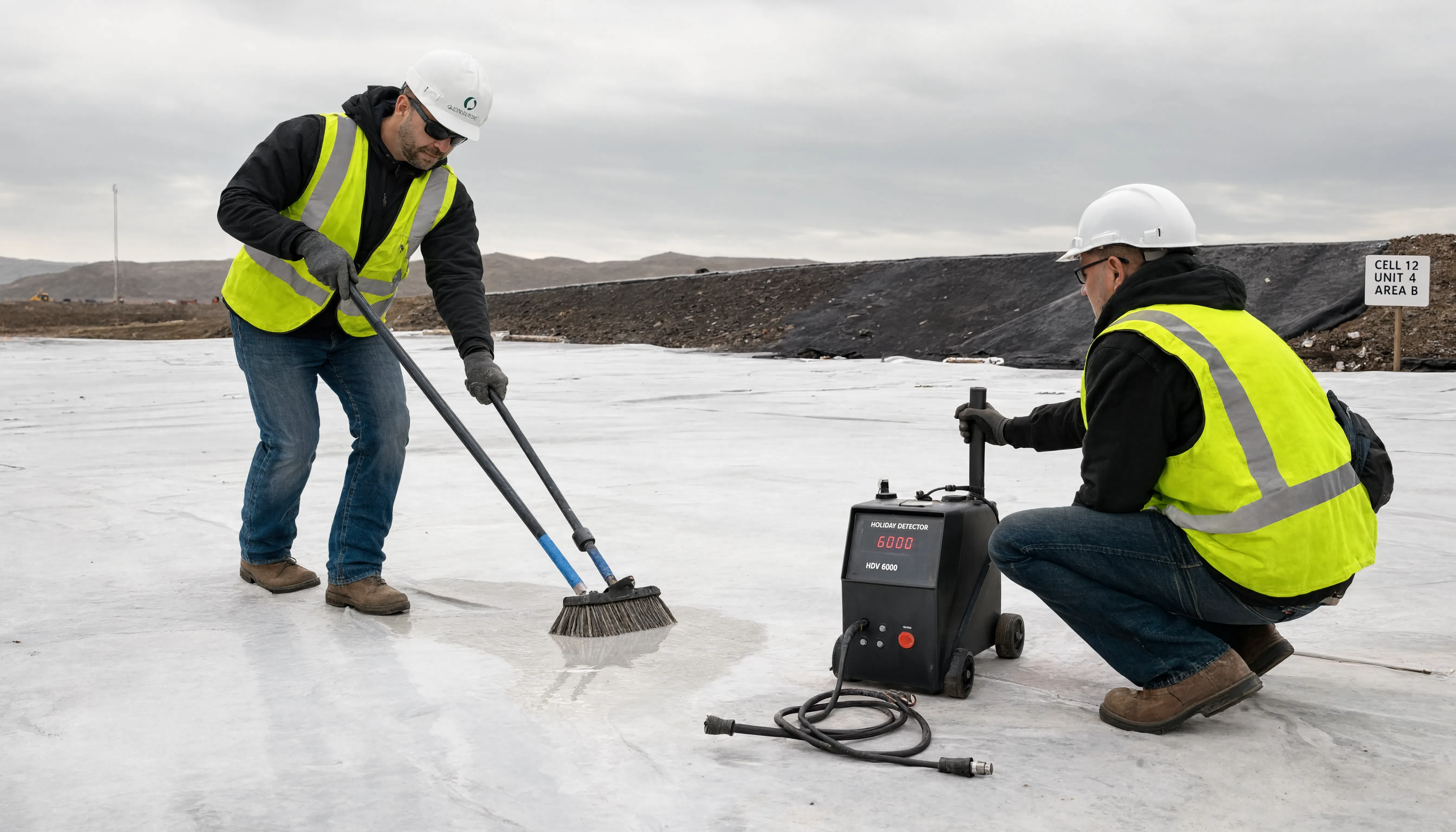
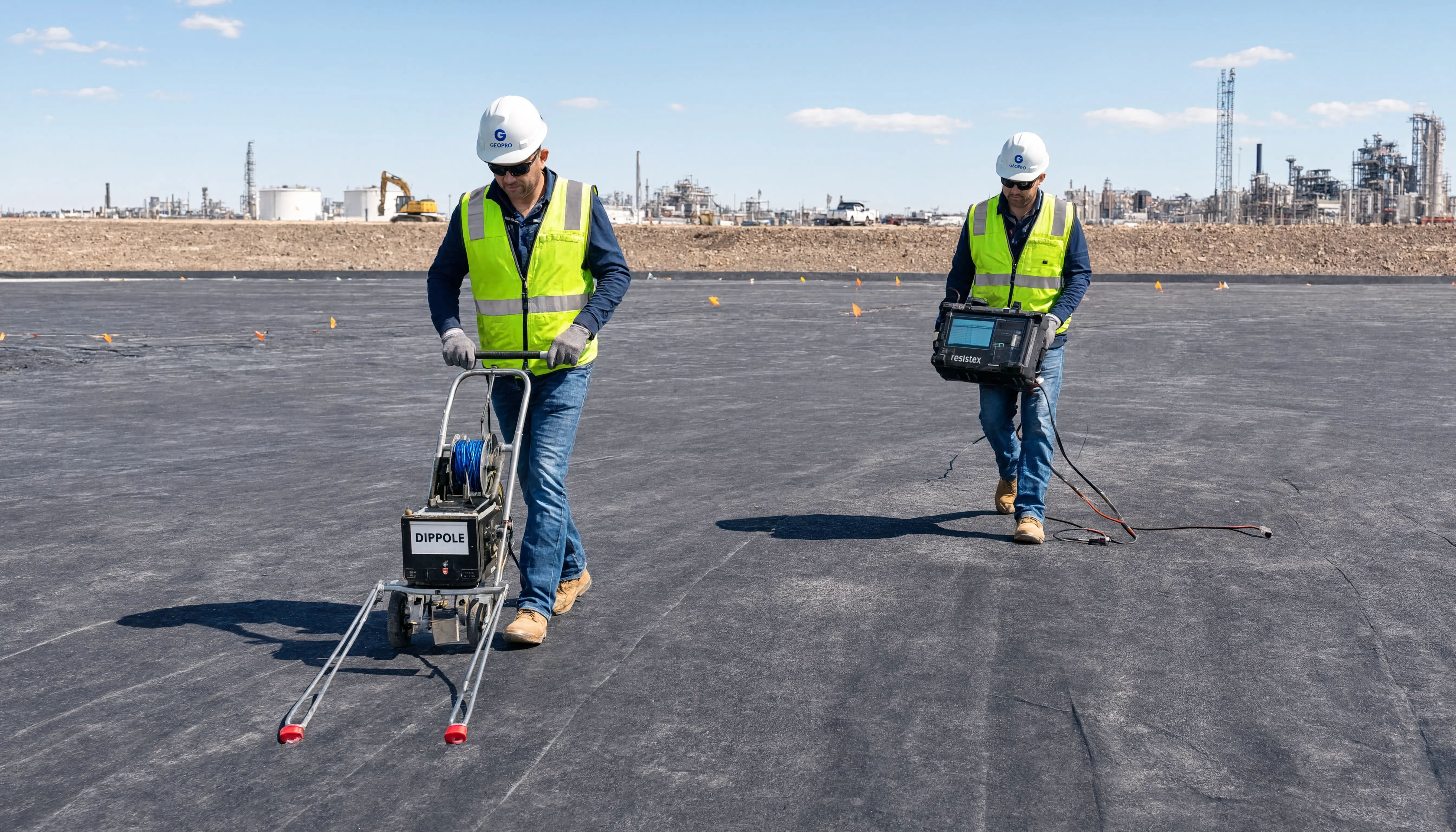
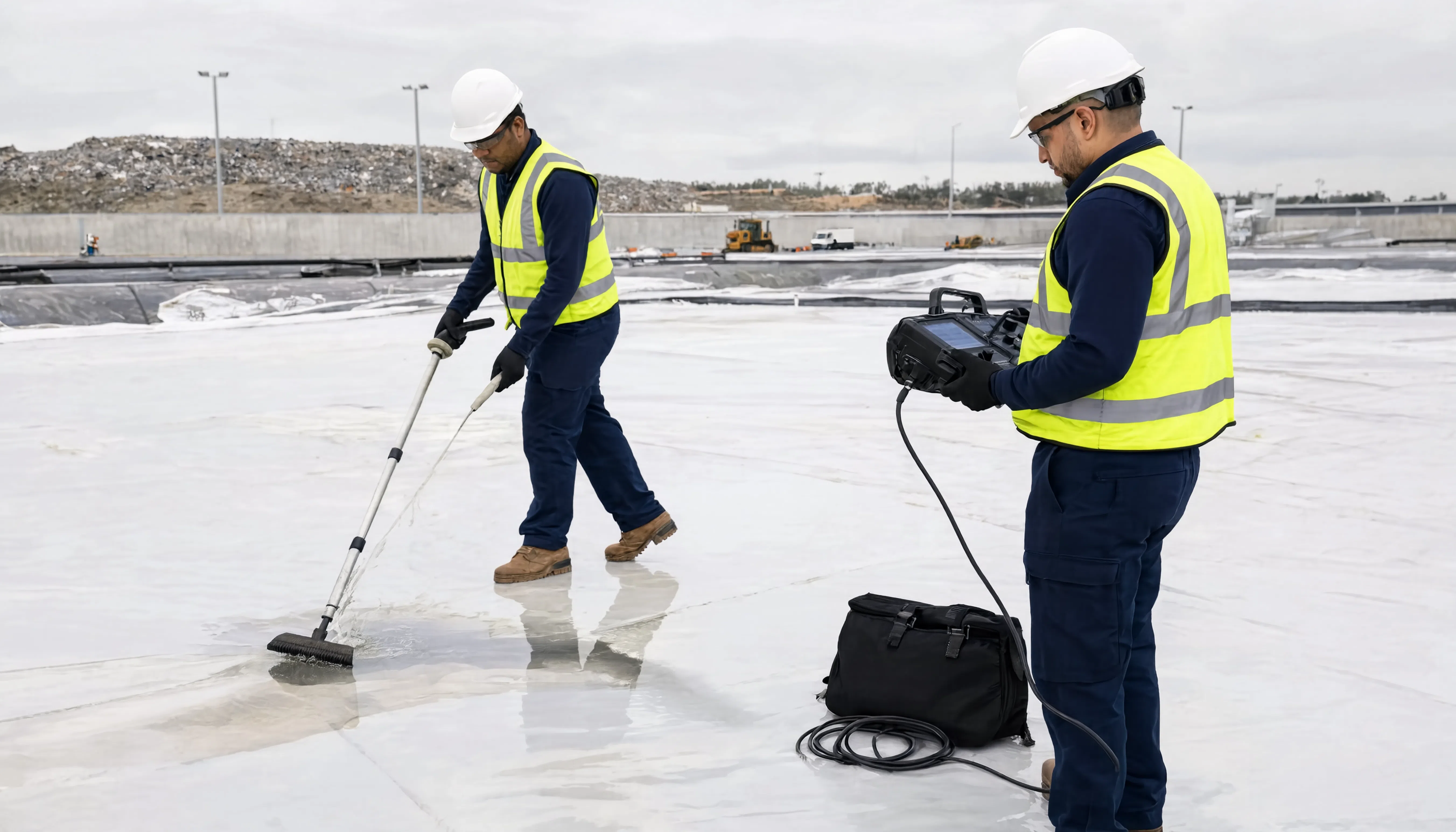
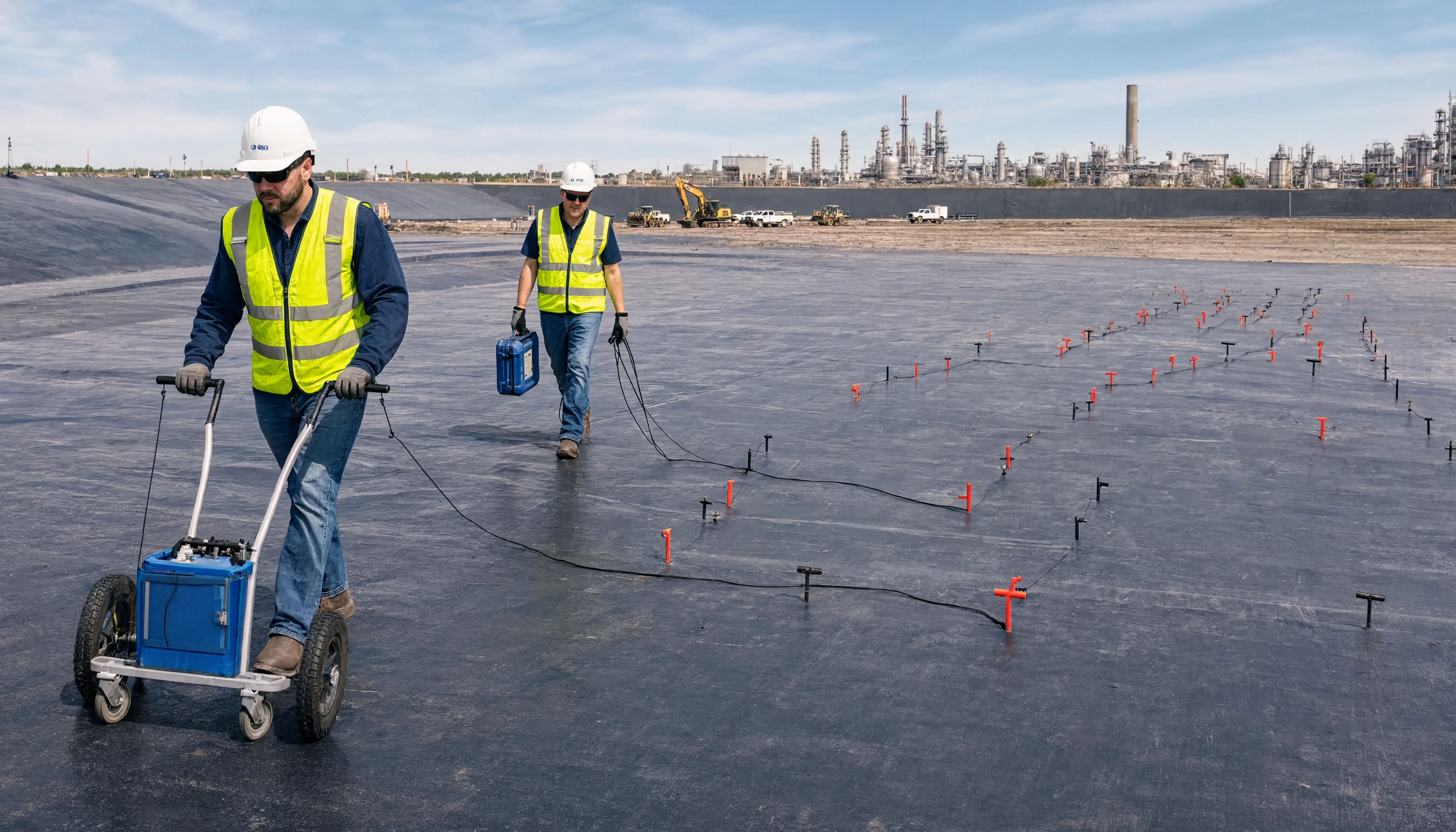
Electrical Leak Location Surveys use electrical methods to detect holes in geomembranes. The basic principle is that a defect allows electrical current to pass through the geomembrane barrier where it otherwise should not. By applying and measuring electrical signals, trained technicians can locate defects with a high degree of precision.
These surveys are valuable because they can identify holes after construction activities have occurred. Depending on the project and survey method, testing may be performed on exposed geomembranes or on covered geomembranes where appropriate conditions exist.
Benefits of Electrical Leak Location Surveys include:
- Locating small holes that visual inspection may miss
- Verifying geomembrane condition after installation
- Supporting construction quality assurance programs
- Reducing leakage risk before operations begin
- Helping prioritize repairs before final acceptance
- Providing documentation for owners, engineers, and regulators
- Improving confidence in containment system performance
For many projects, electrical surveys are one of the most effective ways to confirm that the liner has not been compromised by construction activities.
Best Practices for Reducing Construction Damage
Preventing defects starts with planning, training, and disciplined field execution. While no construction process can eliminate every risk, proper controls can significantly reduce the number and severity of geomembrane imperfections.
Recommended best practices include:
- Prepare and approve the subgrade before deployment
- Remove stones, roots, debris, and sharp objects
- Use qualified and experienced installation crews
- Limit traffic on exposed geomembranes
- Keep tools and equipment off the liner whenever possible
- Use protective geotextiles or cushioning layers where specified
- Control welding conditions and seam preparation
- Avoid dragging panels across rough surfaces
- Protect the geomembrane from wind uplift
- Place cover materials carefully and in controlled lifts
- Maintain adequate cover thickness before equipment access
- Perform timely inspections and repairs
- Conduct Electrical Leak Location Surveys before final acceptance
A strong quality assurance program should include both preventive measures and verification testing. Prevention reduces the likelihood of defects, while testing helps identify holes that still occur despite careful work.
The Cost of Undetected Holes
Undetected construction-related holes can lead to problems that are far more expensive than proactive testing and repair. Once a containment system is filled, covered, or placed into operation, locating and repairing leaks becomes more difficult. In some cases, the system may need to be drained, excavated, shut down, or partially reconstructed.
Potential costs of undetected defects include:
- Leakage investigation expenses
- Operational downtime
- Environmental response costs
- Regulatory penalties
- Delayed project acceptance
- Repair and reconstruction costs
- Loss of containment capacity
- Damage to owner and contractor reputations
By identifying holes before the system is operational, project teams can address problems when repairs are simpler, faster, and less disruptive.
When Should Electrical Leak Location Surveys Be Performed?
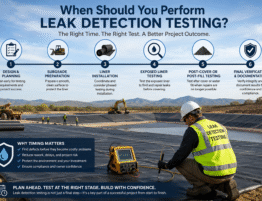
The ideal timing depends on the project design, construction sequence, and survey method. In many cases, testing is performed after geomembrane installation and before the liner is covered. On other projects, surveys may be conducted after cover materials are placed, especially when the goal is to detect damage caused during cover placement.
Electrical Leak Location Surveys may be appropriate:
- After geomembrane installation is complete
- After seam testing and visual inspection
- Before placement of final cover materials
- After soil, drainage aggregate, or protective layers are installed
- Before filling ponds, lagoons, or containment cells
- Before project turnover or regulatory acceptance
- As part of routine containment system assessment
Early coordination with an experienced survey provider is important. Survey conditions, liner configuration, moisture requirements, grounding, access, and project sequencing can all affect survey planning.
FAQ
What causes most geomembrane damage during construction?
Most construction-related defects are caused by sharp objects, heavy equipment, poor subgrade preparation, improper cover placement, tool contact, and installation errors. Even well-managed sites can experience small punctures or holes, which is why verification testing is important.
Can small holes really cause major problems?
Yes. Even small holes can create leakage pathways if liquid reaches the defect. The severity depends on the system design, hydraulic conditions, subgrade, cover materials, and type of contained liquid. Small holes are often the hardest to find without electrical survey methods.
Is visual inspection enough to find geomembrane defects?
Visual inspection is useful, but it is not enough on its own for many projects. Pinholes, small cuts, covered defects, and imperfections near seams may be missed. Electrical Leak Location Surveys provide an added level of verification.
Can damage occur after the geomembrane passes initial inspection?
Yes. Damage can occur during cover placement, anchor trench work, equipment movement, final grading, or other construction activities after initial inspection. This is why testing after key construction stages can be valuable.
What is an Electrical Leak Location Survey?
An Electrical Leak Location Survey is a testing method used to locate holes in geomembranes by detecting electrical current paths through defects. It helps identify holes that may not be visible during standard inspection.
Are Electrical Leak Location Surveys useful for covered geomembranes?
Yes, certain electrical survey methods can be used on covered geomembranes when site conditions are suitable. The correct method depends on the system design, cover material, moisture conditions, and access.
Who should perform leak location testing?
Testing should be performed by experienced specialists with the proper equipment, training, and understanding of geomembrane systems. Accurate testing requires technical knowledge, field experience, and careful survey execution.
Partner With Leak Location Services, Inc.
Construction damage can leave behind hidden defects, imperfections, and holes that threaten the performance of geomembrane containment systems. Proactive testing helps owners, engineers, contractors, and facility managers identify problems early, reduce leakage risk, and move forward with greater confidence.
We are an international company specializing in Electrical Leak Location Surveys of Geomembranes. With more than 33 years of experience, our team delivers first-class surveys for clients worldwide. We bring proven expertise, advanced methods, and a commitment to accuracy on every project.
To protect your next containment project from hidden construction-related holes, contact us today and learn how our Electrical Leak Location Surveys can support your quality assurance goals.