When evaluating geomembrane leak location accuracy, it is important to understand that modern electrical leak location surveys are among the most reliable methods available for identifying damage, defects, and discontinuities in installed geomembrane liners. These surveys are designed to locate leaks that may not be visible during routine inspection, including small punctures, tears, seam defects, construction damage, and other breaches that can compromise containment performance. For facilities that rely on geomembranes to protect soil, groundwater, process liquids, waste materials, or environmental assets, accurate leak detection is not just helpful. It is essential.
Geomembranes are used across landfills, mining operations, wastewater treatment facilities, ponds, reservoirs, secondary containment systems, and industrial containment applications. In each of these environments, liner integrity plays a critical role in environmental protection, regulatory compliance, operational efficiency, and long-term asset performance. Even a small leak can lead to costly consequences if it goes undetected.
Electrical Leak Location Surveys of Geomembranes provide a proven way to verify the liner is free of holes after installation, during construction, or throughout the service life of a containment system. While no inspection method should be viewed as a substitute for proper design, high-quality installation, and quality assurance, electrical leak location surveys are widely recognized as one of the most effective tools for identifying leaks in geomembrane systems.
What Is a Geomembrane Leak Location Survey?
A geomembrane leak location survey is a specialized inspection process used to find holes, defects, or discontinuities in a geomembrane liner. The goal is to determine whether the liner is intact and, if defects are present, to identify their locations accurately so they can be repaired.
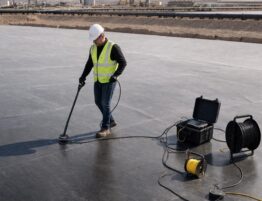
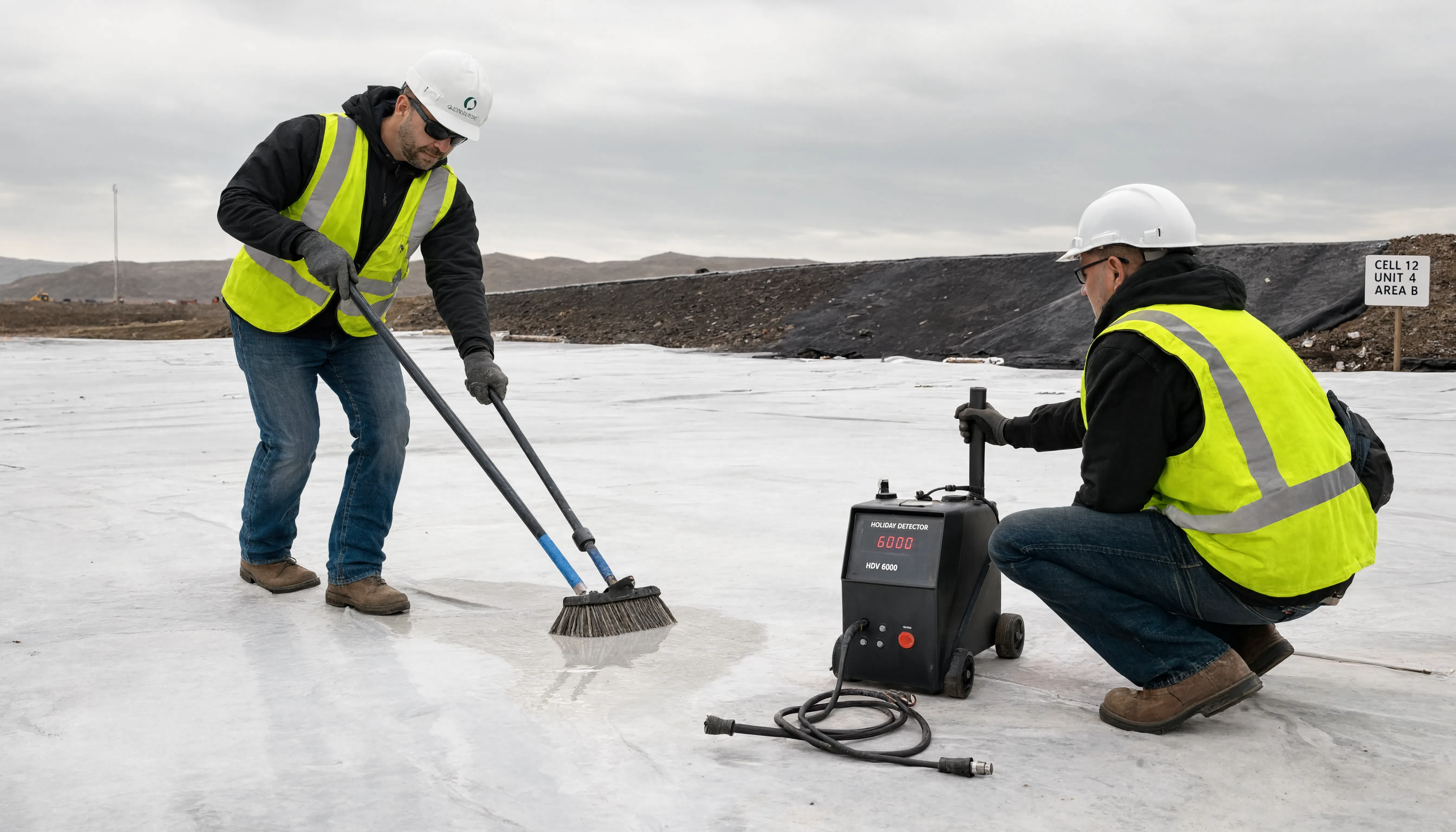
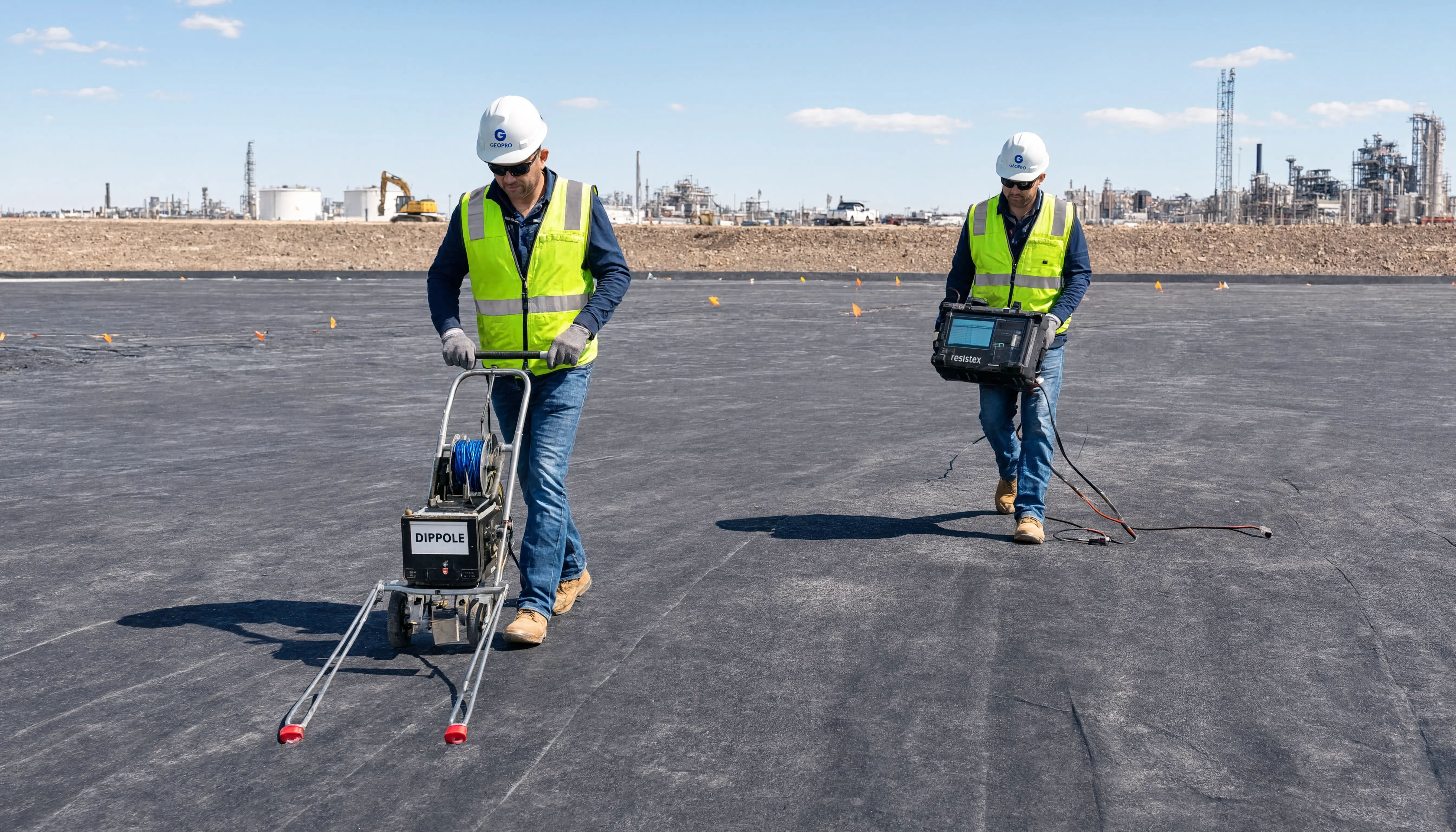
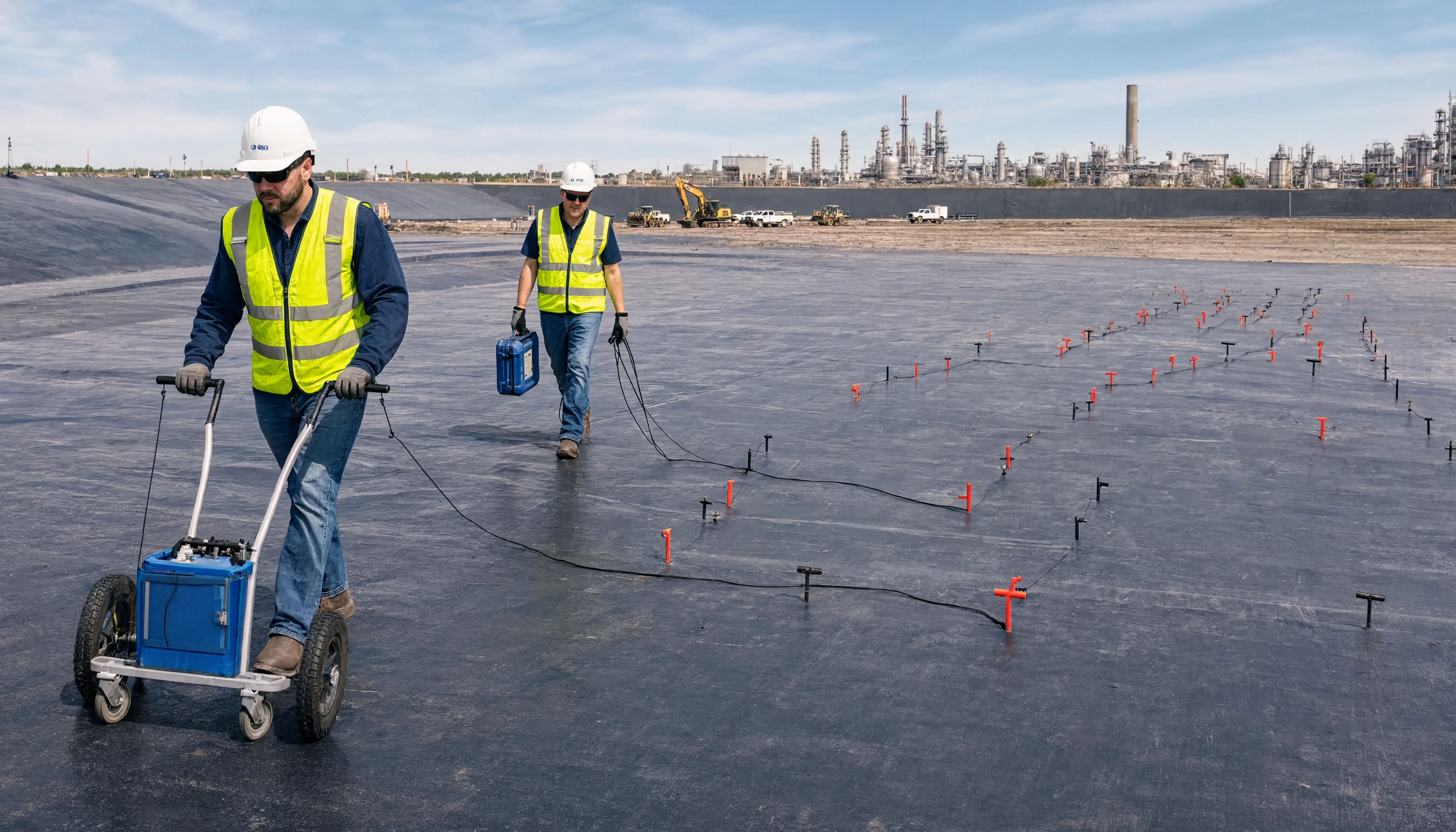
Electrical leak location surveys use electrical principles to detect breaches in the liner. In simple terms, the geomembrane acts as an electrical insulator. When a hole or defect exists, electrical current can pass through that defect into the conductive material beneath the liner. Survey technicians use specialized equipment to detect these electrical signals and trace them back to the source of the leak.
Common applications include:
- Landfill cells and caps
- Heap leach pads
- Tailings facilities
- Process ponds
- Wastewater lagoons
- Secondary containment systems
- Stormwater ponds
- Reservoirs and water storage facilities
- Industrial containment areas
- Floating covers and exposed liner systems
The specific survey method depends on the project conditions, liner configuration, presence of cover material, site geometry, moisture conditions, and other technical factors.
How Accurate Are Electrical Leak Location Surveys?
Electrical leak location surveys can be highly accurate when they are performed by experienced professionals using the correct method for the site conditions. In many cases, these surveys can locate leaks with enough precision that repair crews can excavate or access a very specific area rather than disturb large sections of liner or cover material.
The accuracy of a survey depends on several key factors:
- The survey method selected
- Site preparation
- Liner material and thickness
- Electrical isolation of the geomembrane
- Moisture conditions above and below the liner
- Conductivity of surrounding materials
- Quality of installation
- Experience of the survey team
- Calibration and sensitivity of the equipment
- Presence of wrinkles, seams, penetrations, ballast, or cover soil
When these conditions are properly managed, electrical leak location surveys provide one of the most accurate ways to find geomembrane defects. They are especially valuable because they can identify leaks that are too small, hidden, or inaccessible for visual inspection alone.
Why Visual Inspection Is Not Enough
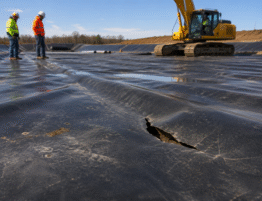
Visual inspection is an important part of geomembrane quality assurance, but it has clear limitations. A liner may appear intact while still containing damage that is difficult or impossible to see. Small punctures, pinholes, stress cracks, and seam defects can be hidden by wrinkles, shadows, dirt, equipment marks, standing water, or cover materials.
Visual inspection becomes even less reliable when a geomembrane has already been covered with soil, aggregate, ballast, waste, or process material. Once the liner is covered, direct visual access is limited or unavailable.
Electrical leak location surveys address this challenge by detecting the electrical signature of a defect rather than relying solely on sight. This makes them especially useful after construction activities, after cover placement, or when a facility needs to verify the liner before operation.
Factors That Affect Geomembrane Leak Location Accuracy
Although electrical leak location surveys are highly effective, accuracy depends on proper execution. The following factors can influence survey performance.
Site Conditions
Site conditions have a direct impact on survey accuracy. Electrical methods require conductive pathways in the right places. Moisture, soil type, cover material, and grounding conditions all matter.
For example, dry cover soil may reduce conductivity and make it more difficult to detect certain defects. In contrast, properly wetted cover material can improve survey performance. Standing water, excessive salt concentration, or uneven moisture distribution can also influence results.
A qualified survey provider evaluates site conditions before and during the survey to determine the best approach.
Survey Method Selection
Different electrical leak location methods are used for different types of geomembrane installations. Selecting the wrong method can reduce accuracy or make the survey impractical.
Common approaches may include:
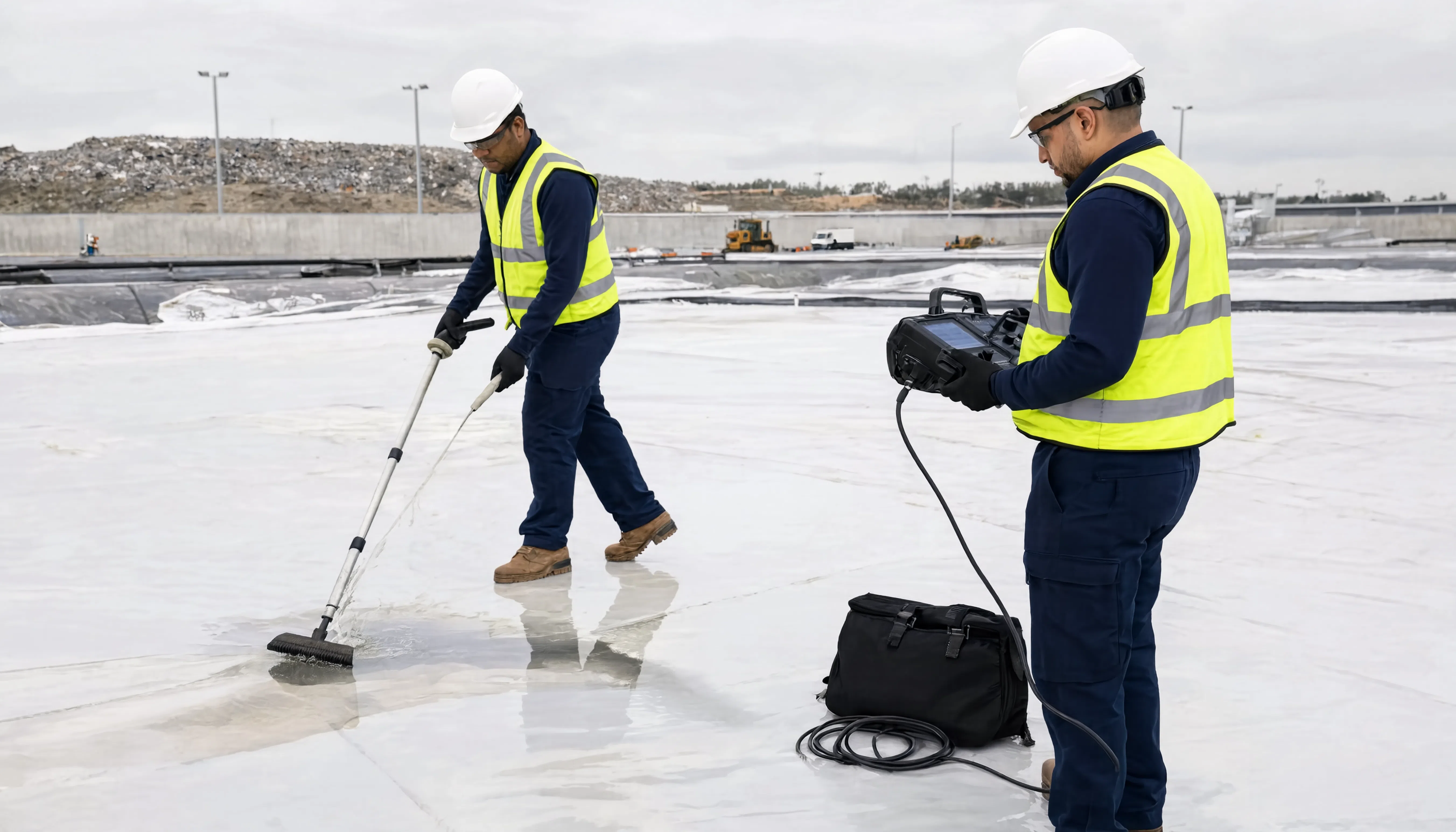
- Water-covered surveys
- Exposed geomembrane surveys
- Soil-covered geomembrane surveys
- Spark testing for certain exposed liner applications
- Specialized methods for complex containment systems
An experienced provider understands which method is appropriate for each liner configuration and project objective.
Liner Electrical Isolation
For electrical leak location to work properly, the geomembrane must function as an electrical barrier. If the liner is not adequately isolated or if conductive elements bridge across the liner, survey results may be affected.
Potential issues include:
- Metal pipes or penetrations
- Conductive anchor trenches
- Wet concrete structures
- Contact between conductive materials above and below the liner
- Inadequate separation at edges or terminations
- Uncontrolled grounding paths
These conditions do not necessarily prevent a survey, but they must be identified and managed by qualified technicians.
Quality of Installation
The condition of the geomembrane installation also affects detection accuracy. Wrinkles, folds, poor seams, bridging, excessive tension, and irregular surfaces can complicate survey work. Damage caused by construction traffic, stone placement, welding defects, or sharp subgrade materials may create multiple leak points.
Technician Expertise
The experience of the survey team is one of the most important accuracy factors. Electrical leak location is technical work that requires more than simply operating equipment. Technicians must understand electrical behavior, geomembrane materials, field conditions, project specifications, and data interpretation.
Experienced survey teams know how to distinguish true leak signals from background noise, site anomalies, electrical interference, and false positives. They also know how to adjust procedures when conditions are less than ideal.
Can Small Leaks Be Detected?
Yes, small leaks can often be detected using electrical leak location methods, provided the site conditions support the survey method being used. Small punctures and pinholes are exactly the kinds of defects that make electrical leak location valuable because they are easy to miss visually.
However, the detectability of a small leak depends on factors such as:
- Moisture and conductivity
- Depth and type of cover material
- Electrical contact through the defect
- Survey grid spacing or probe movement
- Background electrical conditions
- Equipment sensitivity
- Presence of multiple nearby defects
A small defect in favorable conditions may produce a clear signal. A similar defect in poor conditions may be harder to locate. That is why proper planning, preparation, and method selection are essential.
How Accurate Is the Leak Location Itself?
A successful survey not only identifies that a leak exists, but it also helps locate where the leak is. In many cases, the location can be marked in the field with a high degree of precision, allowing repair crews to focus on the affected area.
For exposed geomembranes, the identified leak location may be directly accessible. For covered geomembranes, the survey can narrow the target area so that cover material can be removed more efficiently. This reduces unnecessary excavation, saves time, and helps prevent additional liner damage during repair activities.
The final location accuracy depends on the survey method, cover depth, site conditions, and the clarity of the electrical signal.
Are Geomembrane Leak Location Surveys 100 Percent Accurate?
No field inspection method should be described as 100 percent accurate under every condition. Electrical leak location surveys are highly effective, but they are influenced by real-world variables. Site preparation, electrical isolation, environmental conditions, liner configuration, and survey access can all affect results.
That said, when performed correctly by qualified specialists, electrical leak location surveys provide a much higher level of confidence than visual inspection alone. They are one of the most reliable ways to identify geomembrane defects before they become larger environmental, operational, or financial problems.
The best way to maximize accuracy is to involve an experienced leak location provider early in the project so survey requirements can be incorporated into planning, installation, and quality assurance procedures.
When Should a Leak Location Survey Be Performed?
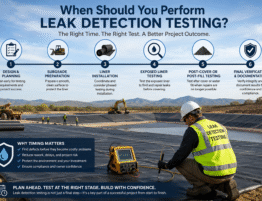
Geomembrane leak location surveys can be valuable at several stages of a project.
After Installation
Post-installation surveys help confirm that the liner was not damaged during deployment, seaming, equipment movement, or construction activity. This is often one of the most important times to perform a survey because defects can be repaired before the facility is placed into service.
After Cover Placement
Cover soil, aggregate, drainage layers, and ballast can damage geomembranes if placement is not carefully controlled. A survey after cover placement can help detect damage that occurred after the liner was visually inspected.
During Construction Quality Assurance
Leak location surveys can be integrated into construction quality assurance programs to verify liner effectiveness at key milestones. This helps owners, engineers, and contractors identify problems before they become more difficult to correct.
During Facility Operation
Existing facilities may use leak location surveys to investigate suspected liner problems, evaluate performance, or support maintenance planning. Depending on the system design and site conditions, surveys may be possible even after a facility has been in service.
Benefits of Accurate Geomembrane Leak Location
Accurate leak detection provides significant value for facility owners, engineers, contractors, and regulators.
Key benefits include:
- Improved confidence in liner installation
- Earlier detection of construction damage
- Reduced environmental risk
- More targeted repairs
- Less unnecessary excavation
- Better documentation for quality assurance
- Support for regulatory compliance
- Reduced long-term liability
- Protection of groundwater and surrounding soil
- Increased confidence before facility startup
For complex containment systems, these benefits can translate into major cost savings and risk reduction.
Why Experience Matters in Leak Location Accuracy
Electrical Leak Location Surveys of Geomembranes require specialized knowledge, field judgment, and technical precision. The equipment is important, but the expertise behind the equipment is just as important.
An experienced provider can:
- Recommend the correct survey method
- Identify site conditions that may affect accuracy
- Coordinate with installers, engineers, and owners
- Interpret signals correctly
- Reduce false positives and false negatives
- Provide clear documentation
- Help guide repair verification
- Adapt to challenging project conditions
This is especially important for large-scale projects, complex facilities, or sites where liner failure could create serious environmental or financial consequences.
How to Improve Survey Accuracy Before the Work Begins
Project teams can take several steps to support accurate results.
Helpful preparation measures include:
- Designing the liner system with leak location in mind
- Maintaining proper electrical isolation
- Avoiding unnecessary conductive bridges
- Preparing the subgrade properly
- Preventing damage during liner installation
- Controlling construction traffic
- Using suitable cover material placement practices
- Maintaining appropriate moisture conditions
- Providing access for survey technicians
- Coordinating survey timing with construction milestones
- Documenting penetrations, seams, repairs, and unusual site features
The earlier a leak location specialist is involved, the easier it is to plan for accurate and efficient survey work.
What Happens After a Leak Is Found?
When a leak is detected, the survey team typically marks the location in the field and documents the finding. The repair team can then expose the area if necessary, inspect the defect, and perform the appropriate repair.
After repairs are completed, the area may be retested to verify that the defect has been corrected. This repair verification step is important because it confirms that the liner has been restored and that no additional nearby defects were missed during the repair process.
Accurate documentation also provides a valuable record for owners, engineers, contractors, and regulators.
FAQ About Geomembrane Leak Location Accuracy
How accurate are geomembrane leak location surveys?
Geomembrane leak location surveys can be highly accurate when the correct electrical method is used and site conditions are suitable. Accuracy depends on liner configuration, moisture, conductivity, cover material, electrical isolation, and technician expertise.
Can electrical leak location find very small holes?
Yes. Electrical leak location methods can often detect small holes, punctures, and pinholes that may not be visible during a visual inspection.
Is visual inspection still necessary?
Yes. Visual inspection remains an important part of quality assurance, but it should not be the only method used. Electrical leak location adds another level of verification by detecting defects that may be hidden or difficult to see.
Can surveys be performed after the liner is covered?
Yes. Certain electrical leak location methods are designed for covered geomembranes. These surveys can help identify damage caused during cover placement or construction activities.
Are leak location surveys useful for existing facilities?
Yes. Depending on the site design and operating conditions, surveys may be used to investigate suspected leaks, assess liner conditions, or support maintenance and compliance efforts.
What can reduce survey accuracy?
Dry or poorly conductive materials, poor electrical isolation, complex penetrations, excessive interference, unsuitable survey method selection, and inexperienced survey execution can all reduce accuracy.
Do surveys damage the geomembrane?
No. Electrical leak location surveys are non-destructive when performed properly. They are designed to identify existing defects without damaging the liner system.
Who should perform geomembrane leak location surveys?
Surveys should be performed by qualified specialists with specific experience in Electrical Leak Location Surveys of Geomembranes. Experience is critical for method selection, signal interpretation, and reliable documentation.
Work with Leak Location Services, Inc.
For more than 33 years, Leak Location Services, Inc. has specialized in Electrical Leak Location Surveys of Geomembranes for clients around the world. As an international company, we deliver first-class survey services for landfills, mining facilities, ponds, reservoirs, wastewater systems, industrial containment projects, and other geomembrane-lined facilities.
If your project depends on your liner being free of damage, accurate leak detection matters. Partner with a team that understands the technical demands of geomembrane systems and has the global field experience to deliver reliable results.
Contact us today to learn how our experienced team can support your next geomembrane leak detection project.