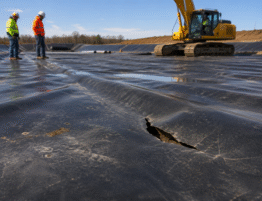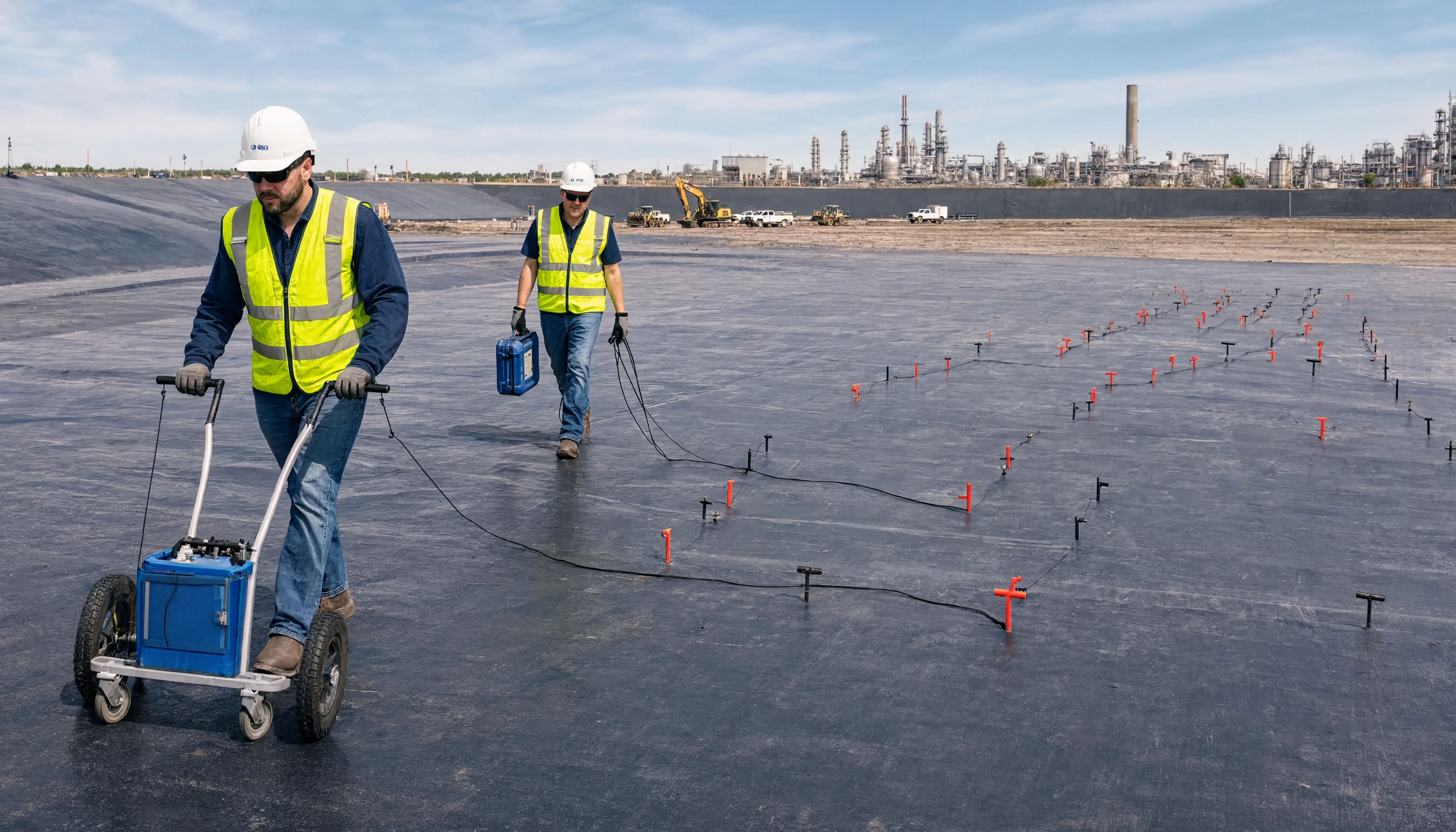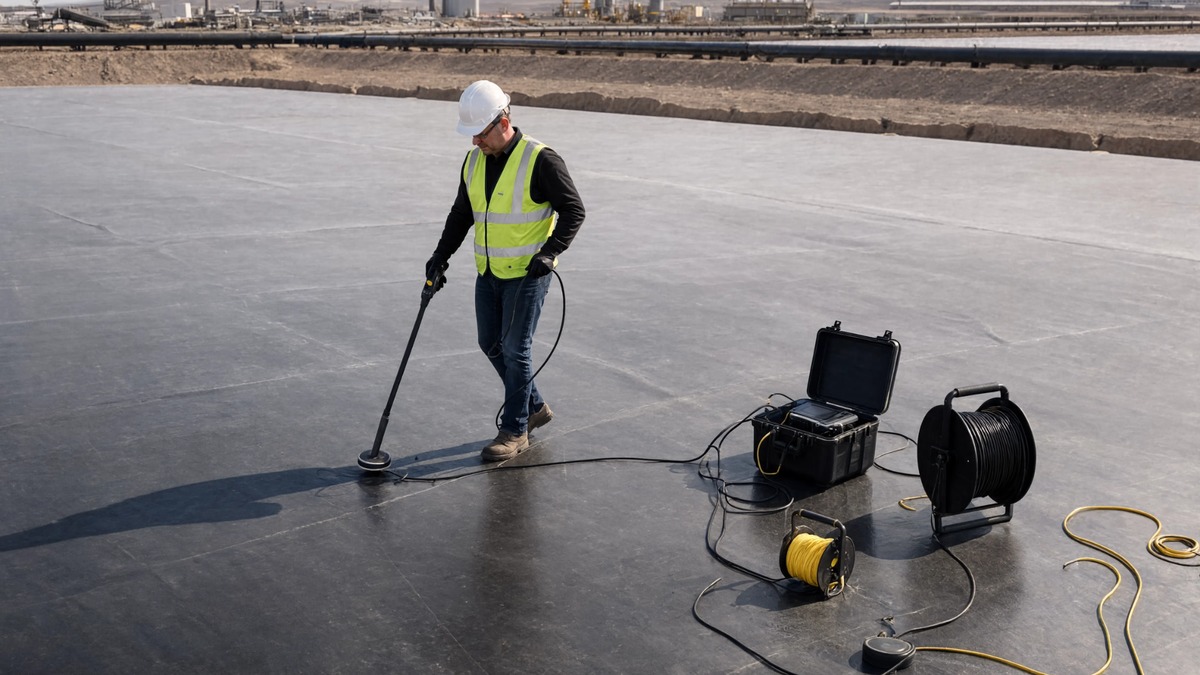
Geomembrane liners are designed to provide a reliable barrier for containment systems, but even carefully manufactured and installed materials can develop defects, imperfections, and holes. These issues may result from transportation, installation activities, construction traffic, seams, punctures, or other site conditions. Geomembrane leak detection surveys provide a highly effective method for identifying these problem areas so they can be located and addressed before a containment system is placed into full service. When appropriate electrical leak location methods are used under suitable site conditions, these surveys can locate extremely small defects with a level of precision that conventional visual inspections cannot typically achieve.
How Accurate Are Geomembrane Leak Location Surveys?
Electrical leak location surveys are considered highly accurate because they are specifically designed to detect electrical pathways through holes or defects in electrically insulating geomembranes. Instead of relying solely on visual observation, electrical methods use measurable electrical signals to identify locations where current passes through the liner.
The exact level of accuracy depends on several factors, including:
- The electrical leak location method being used
- The geomembrane material and thickness
- Whether the geomembrane is exposed or covered
- The conductivity of materials above and below the liner
- Site preparation
- Equipment calibration
- Survey spacing
- Environmental conditions
- The experience of the survey technician
- The accessibility of the area being tested
Under properly prepared conditions, electrical leak location surveys can identify defects that may be extremely difficult or impossible to see with the naked eye.
Importantly, accuracy involves more than simply determining whether a defect exists. A successful survey must also narrow the signal to a sufficiently precise location so the geomembrane can be exposed, examined, and repaired without unnecessarily disturbing a large area.
Why Electrical Leak Location Surveys Can Be So Precise
Most geomembranes commonly used for containment applications are electrically insulating materials. The soil, water, concrete, or other conductive material around the geomembrane can provide a pathway for electrical current.
When the geomembrane contains no openings, the liner acts as an electrical barrier. When a hole or defect is present, electrical current can pass through that opening.
Electrical leak location equipment measures changes in the electrical field created by that current flow. Technicians interpret these measurements to determine the approximate location of the defect.
Because the method responds to electrical characteristics rather than visual appearance, it can identify problems such as small punctures that might otherwise go unnoticed.
How Small of a Hole Can a Survey Detect?
One of the major advantages of electrical leak location surveying is its ability to locate very small defects.
The exact detectable size depends on the survey method and site conditions. In favorable conditions, electrical methods can locate pinhole-sized openings. This makes electrical surveying particularly valuable because even a small puncture can provide a pathway through a containment liner.
The detectability of a hole can be influenced by factors including:
- Hole diameter
- Depth of cover material
- Moisture content
- Conductivity of surrounding materials
- Geomembrane thickness
- Electrical contact with the material beneath the liner
- Distance between survey measurements
- Electrical interference from nearby infrastructure
The goal is not simply to identify large, obvious damage. Electrical leak location surveys are specifically useful for finding defects that would otherwise be difficult to identify.
Accuracy of Surveys on Exposed Geomembranes
Exposed geomembrane surveys are performed before the liner has been covered with soil, drainage material, water, or other protective materials.
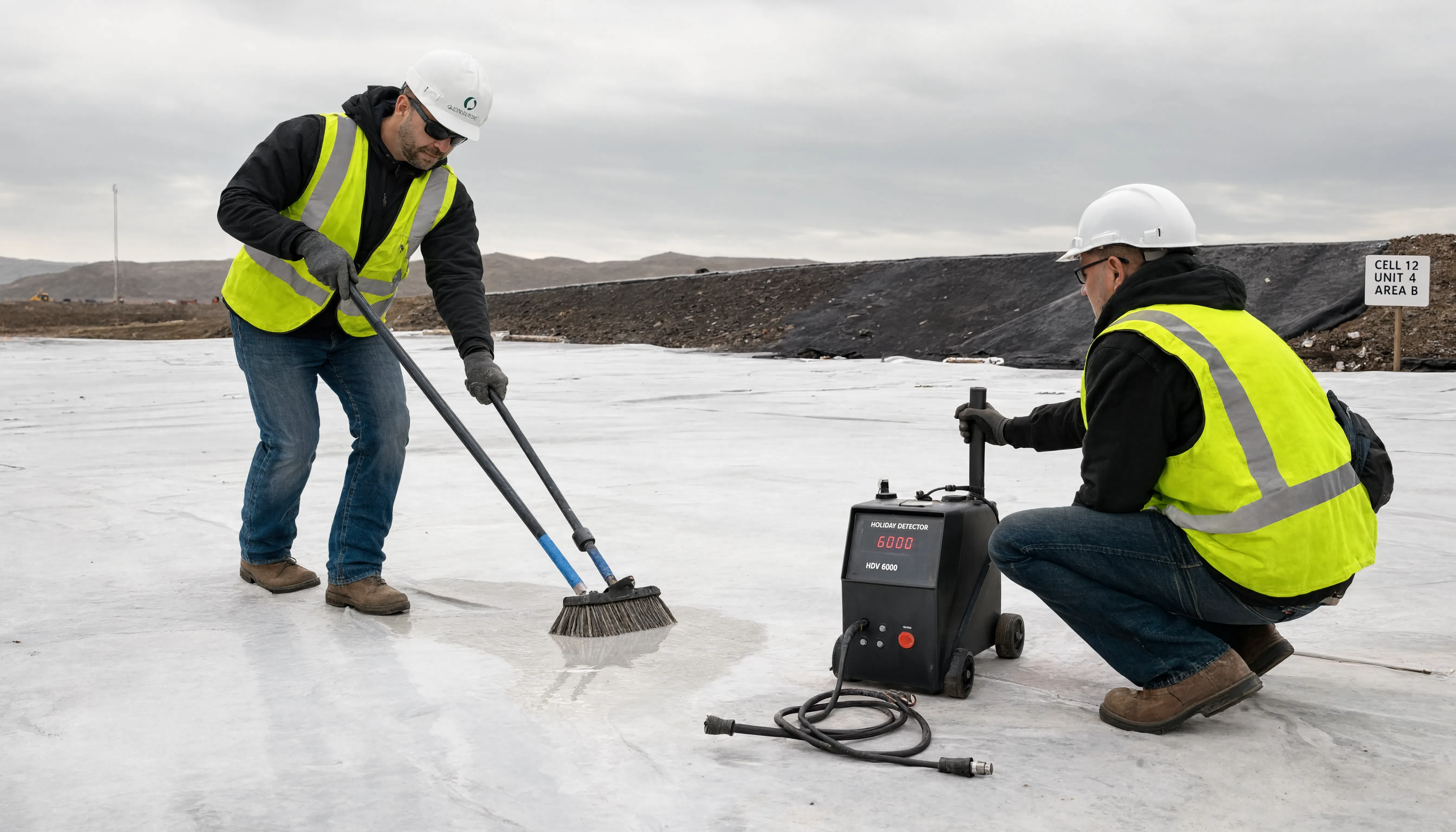
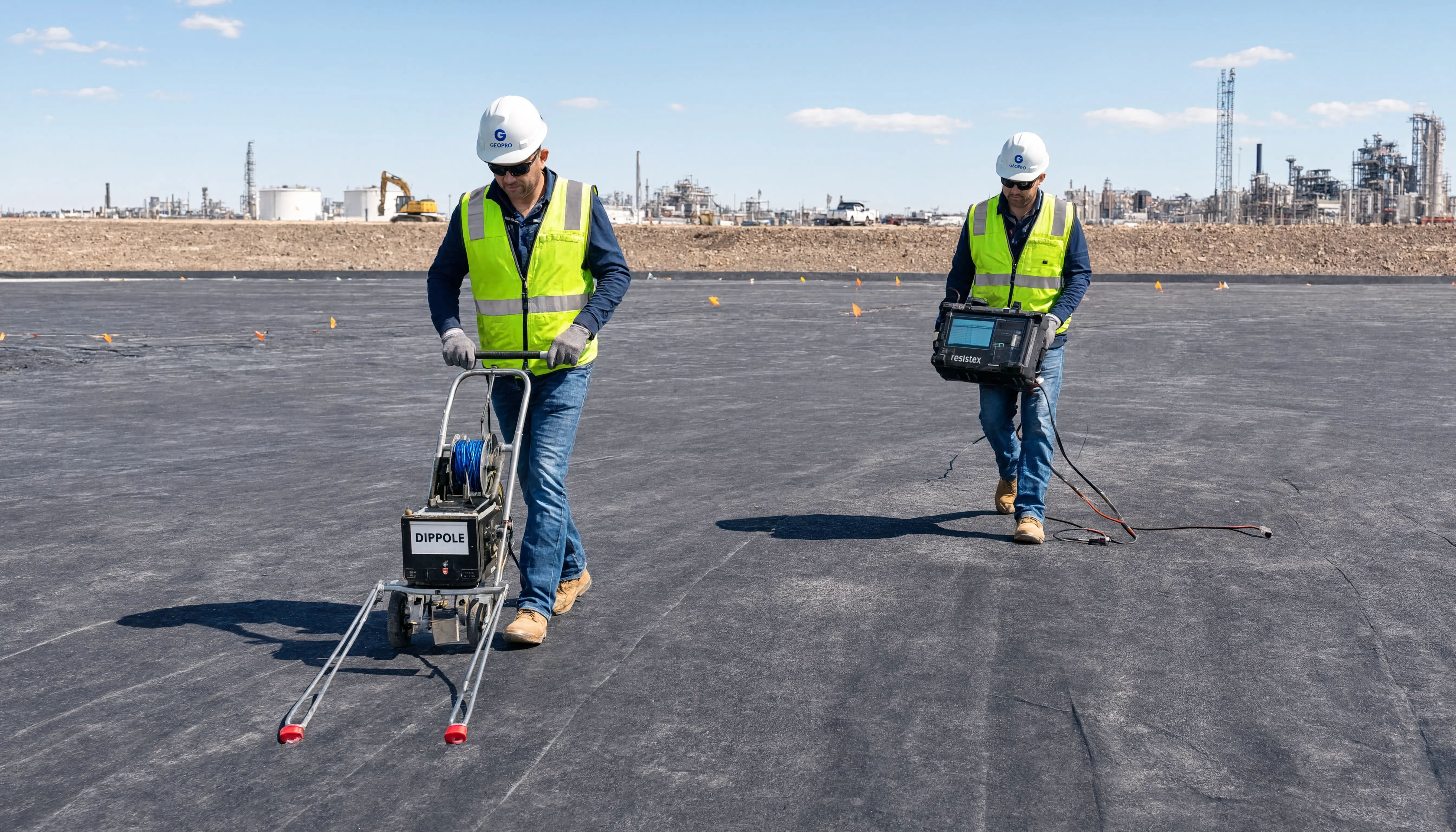
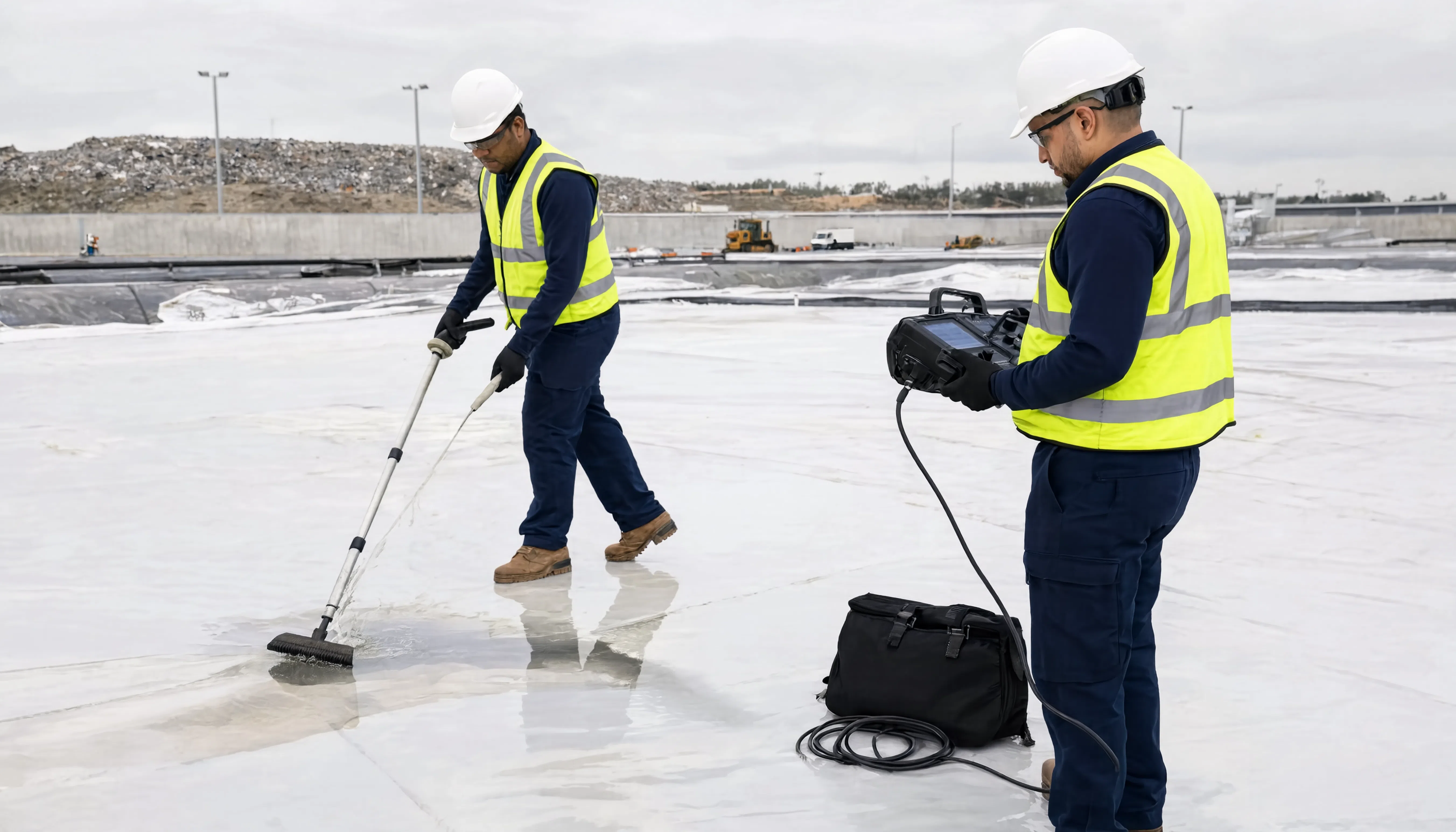
Several electrical methods can be used depending on the liner configuration and project requirements.
Exposed surveys provide the advantage of immediate access to the geomembrane surface. When a defect is located, technicians can typically mark the area directly. Repair crews can then examine and repair the damaged location.
Because there is little or no material covering the liner, defect locations can often be identified with excellent positional accuracy.
Exposed geomembrane surveys are particularly useful after installation activities that may have introduced imperfections, punctures, or other damage.
Accuracy of Surveys on Covered Geomembranes
Electrical leak location methods can also be used after geomembranes have been covered with certain conductive materials.
For example, surveys may be performed when the liner is covered with:
- Soil
- Sand
- Drainage material
- Water
- Other electrically conductive cover materials
Covered geomembrane surveys are valuable because damage frequently occurs during the placement of protective soil or aggregate. Construction equipment, sharp stones, tools, and other objects can create holes after the geomembrane itself has already been inspected.
The additional cover material can influence positional accuracy because the electrical signal must be measured through that material. However, with proper survey procedures and suitable site conditions, technicians can still narrow defects to defined locations for excavation and repair.
The depth, moisture content, and conductivity of the covering material are particularly important considerations.
Why Site Conditions Affect Survey Accuracy
Electrical leak location methods depend on the movement of electrical current. For that reason, the electrical characteristics of the materials around the geomembrane are important.
Conductive Materials
Materials above and below the liner generally need sufficient conductivity for the electrical circuit used during testing.
Dry, electrically resistive materials can make surveying more difficult. Moisture may sometimes be necessary to improve conductivity.
Electrical Isolation
The geomembrane should separate electrically conductive materials on opposite sides of the liner as effectively as possible.
Unwanted electrical connections around the edges of the liner, through pipes, concrete structures, conductive geotextiles, or other components can create alternative electrical pathways. These pathways may interfere with the survey signal.
Cover Depth
For covered geomembranes, deeper cover material may reduce positional precision because the electrical field spreads as it moves through the conductive material.
Proper survey procedures compensate for these conditions as much as practical.
Moisture Conditions
Moisture can significantly affect conductivity. Very dry soil may not conduct electricity well enough for effective testing, while properly conditioned cover material can provide strong electrical response characteristics.
Technician Experience Matters
Electrical leak location surveying requires specialized knowledge. Equipment alone does not determine the accuracy of a survey.
Experienced technicians understand how to recognize legitimate defect signals and distinguish them from electrical interference or site-related anomalies.
They must also understand how factors such as liner geometry, grounding, pipes, anchor trenches, conductive structures, moisture, and cover materials affect survey measurements.
A qualified survey team can evaluate site conditions before testing begins and determine whether modifications are necessary to improve survey effectiveness.
Technician experience becomes especially important on complex facilities where numerous penetrations, structures, and electrical pathways may influence readings.
What Can Reduce Survey Accuracy?
Several conditions can make defects more difficult to locate or reduce the precision of survey results.
Potential issues include:
- Poor electrical isolation
- Extremely dry cover material
- Excessively thick cover layers
- Conductive materials bridging the geomembrane
- Improper site preparation
- Electrical interference
- Inadequate survey spacing
- Limited access to certain areas
- Improper equipment setup
- Insufficient conductivity beneath the liner
Survey planning should address these conditions whenever possible.
A knowledgeable leak location provider can review construction details and site conditions before testing to identify potential challenges.
Are Electrical Surveys More Reliable Than Visual Inspections?
Visual inspection is an important part of geomembrane quality control, but it has limitations.
A technician walking an exposed liner may identify visible punctures, tears, wrinkles, seam problems, or surface damage. However, extremely small holes may be difficult to see, particularly across large installations.
Once a liner has been covered, visual inspection becomes even more limited.
Electrical leak location surveys provide an additional verification method that does not depend on technicians physically seeing the defect.
Visual inspections and electrical surveys, therefore, serve different purposes and can complement one another.
When Should a Geomembrane Leak Location Survey Be Performed?
Survey timing depends on the facility design and construction sequence.
Electrical leak location surveys may be performed:
- After geomembrane installation
- After seaming and repair work
- Before cover material is placed
- After protective cover or drainage material is installed
- After construction activities near the liner
- Before a containment facility begins operation
- During maintenance or investigation activities
Performing surveys at multiple construction stages may provide additional opportunities to identify newly created holes.
For example, an exposed liner may be surveyed before cover placement, followed by another survey after soil or drainage materials are installed. The second survey can identify damage that occurred during the covering process.
Why Survey Coverage Matters
Survey accuracy also depends on how thoroughly the site is tested.
Electrical leak location surveys typically involve systematic measurements across the survey area. Proper measurement spacing helps technicians identify electrical gradients associated with defects.
If measurement spacing is too wide, small or weak signals may be more difficult to define precisely.
Professional survey procedures are designed to provide appropriate coverage based on the electrical method, geomembrane configuration, and site conditions.
Documentation is also important. Survey reports should clearly identify the areas tested, methods used, conditions encountered, and defect locations discovered during the survey.
What Happens When a Defect Is Located?
When survey equipment indicates a potential defect, technicians typically perform additional measurements around the area to narrow the location.
Once the signal has been isolated, the location can be marked for further investigation.
The repair process generally includes:
- Identifying the suspected defect location.
- Exposing the geomembrane if it is covered.
- Visually confirming the defect.
- Repairing the damaged area.
- Testing or evaluating the repair according to project procedures.
- Continuing the survey to identify additional defects.
In some projects, repaired areas may also be resurveyed to verify that the electrical signal associated with the defect is no longer present.
What Types of Facilities Use Geomembrane Leak Location Surveys?
Electrical leak location surveys can be applied to many facilities that rely on geomembrane containment systems.
Examples include:
- Landfills
- Waste containment facilities
- Mining facilities
- Heap leach pads
- Process ponds
- Wastewater lagoons
- Evaporation ponds
- Industrial containment areas
- Secondary containment systems
- Reservoirs
- Stormwater ponds
- Environmental remediation sites
The appropriate survey method depends on the specific geomembrane configuration and surrounding materials.
Why Accuracy Matters
A small defect can be difficult to find once a large containment system is operational. Locating holes during construction or commissioning allows repairs to be made while the liner is still reasonably accessible.
Accurate survey results can also reduce unnecessary excavation.
If technicians can narrow a defect to a relatively small area beneath cover material, contractors can focus excavation efforts rather than removing large sections of soil or drainage material in an attempt to locate the problem.
Accurate detection can therefore support both environmental protection and efficient construction management.
Frequently Asked Questions
How accurate is electrical geomembrane leak detection?
Electrical leak location methods can be highly accurate when site conditions are appropriate, and the survey is performed by experienced technicians. They can locate very small defects and narrow their positions for investigation and repair.
Can a survey detect pinholes?
Yes. Under favorable conditions, electrical leak location methods can detect very small openings, including pinhole-sized defects.
Can leak location surveys be performed after the geomembrane is covered?
Yes. Certain electrical leak location methods are specifically designed for geomembranes covered with conductive materials such as soil or water.
Does the liner need to be exposed for testing?
Not always. The required configuration depends on the electrical survey method being used. Both exposed and covered geomembranes can be surveyed under appropriate conditions.
Can electrical leak location surveys find every type of defect?
Electrical methods are designed to locate holes that create an electrical pathway through an insulating geomembrane. Site configuration, conductivity, electrical isolation, defect characteristics, and other factors can influence detectability.
What makes a geomembrane survey less accurate?
Poor conductivity, electrical connections around the liner, excessive cover depth, interference, limited access, improper preparation, and inadequate survey procedures can reduce survey effectiveness.
Should a geomembrane be surveyed more than once?
In some projects, multiple surveys can be beneficial. For example, a survey may be performed while the geomembrane is exposed and another after cover material has been placed to identify damage caused during subsequent construction.
Is visual inspection enough to find geomembrane holes?
Visual inspection is useful, but it may not identify small punctures or defects hidden beneath cover materials. Electrical leak location surveying provides an additional method for locating openings that may not be visually apparent.
Choose Leak Location Services, Inc. for Professional Geomembrane Surveys
The accuracy of a geomembrane leak location survey depends on far more than the equipment used. Proper site evaluation, survey methodology, electrical conditions, systematic testing, and experienced interpretation all play critical roles in locating defects as precisely as possible.
We specialize in Electrical Leak Location Surveys of Geomembranes for clients around the world. With more than 33 years of experience, our international team has the specialized knowledge required to perform first-class surveys across a wide range of geomembrane containment applications.
Whether your project involves an exposed liner, covered geomembrane, new installation, or complex containment facility, our experienced professionals can help identify holes, defects, and imperfections that might otherwise remain undetected.
Contact us today to learn more about our electrical leak location survey services and discuss the requirements of your next geomembrane project.