When containment systems are designed to protect soil, groundwater, liquids, waste materials, or valuable process fluids, choosing the right geomembrane leak detection method is essential. Geomembranes are used in landfills, ponds, reservoirs, mining facilities, wastewater treatment plants, secondary containment systems, and many other critical applications. Even when geomembranes are installed by experienced crews, defects, imperfections, and holes can occur during manufacturing, transportation, deployment, welding, covering, or routine site activity. The challenge is finding those problem areas accurately before they lead to costly environmental, operational, or regulatory consequences.
Geomembrane leak detection is not a single technique. It includes a range of methods, from visual inspections and destructive seam testing to advanced electrical leak location surveys. Traditional approaches still play an important role in quality assurance and quality control, but they have limitations. Electrical methods are designed to locate holes and certain defects that may not be visible, especially after installation or cover material placement.
This guide explains how electrical leak location compares with traditional geomembrane inspection techniques, where each method is useful, and why many facility owners, engineers, contractors, and regulators rely on electrical surveys for more complete leak detection.
Why Geomembrane Leak Detection Matters
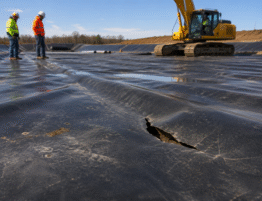
A geomembrane is often the primary barrier between contained material and the surrounding environment. In many applications, a small hole can become a large problem if it goes undetected. Liquid can migrate through an opening, potentially leading to environmental contamination, product loss, erosion, unstable subgrades, regulatory violations, or expensive repairs.
Common causes of geomembrane defects, imperfections, and holes include:
- Sharp stones or debris beneath the liner
- Equipment traffic during construction
- Dropped tools or materials
- Poor welding conditions
- Wrinkles, bridging, or stress points
- Damage during placement of drainage aggregate or soil cover
- Animal activity or weather-related damage
- Manufacturing flaws or transportation damage
Because these issues can appear at different stages of a project, geomembrane leak detection should be viewed as a practical risk reduction measure, not just a final checklist item.
What Are Traditional Geomembrane Leak Detection Techniques?
Traditional geomembrane inspection techniques include visual inspection, seam testing, vacuum box testing, air lance testing, destructive testing, and water balance observations. These methods are widely used during construction quality assurance and can help identify certain issues before a facility is placed into service.
Traditional techniques often focus on visible conditions, seam quality, and specific weld areas. They are valuable, but they may not identify small holes in the field of the liner or defects hidden beneath cover material.
Visual Inspection
Visual inspection is one of the most basic and common traditional methods. Inspectors look for obvious defects such as cuts, punctures, scratches, wrinkles, poor seams, fishmouths, burn marks, exposed subgrade hazards, and areas damaged by equipment or weather.
Visual inspection is useful because it is fast, inexpensive, and can be performed throughout installation. However, it depends heavily on lighting, access, cleanliness, inspector experience, and whether the geomembrane surface is exposed. Small holes can be nearly impossible to see, especially on textured liners, dark materials, or large projects with extensive surface area.
Visual inspection works best as an early quality control tool, not as the only leak detection method.
Seam Testing
Seams are a major focus during geomembrane installation because panels must be welded together to create a continuous barrier. Traditional seam testing methods include non-destructive and destructive approaches.
Non-destructive seam testing may include:
- Air pressure testing of dual-track fusion welds
- Vacuum box testing
- Air lance testing
- Spark testing for certain liner types and configurations
Destructive seam testing involves cutting samples from completed seams and testing them for peel and shear strength. These tests help verify weld quality and installer performance.
Seam testing is important, but it does not evaluate the entire geomembrane surface. A liner can have excellent seams and still contain holes in the field of the sheet from stones, equipment, tools, or cover placement.
Vacuum Box Testing
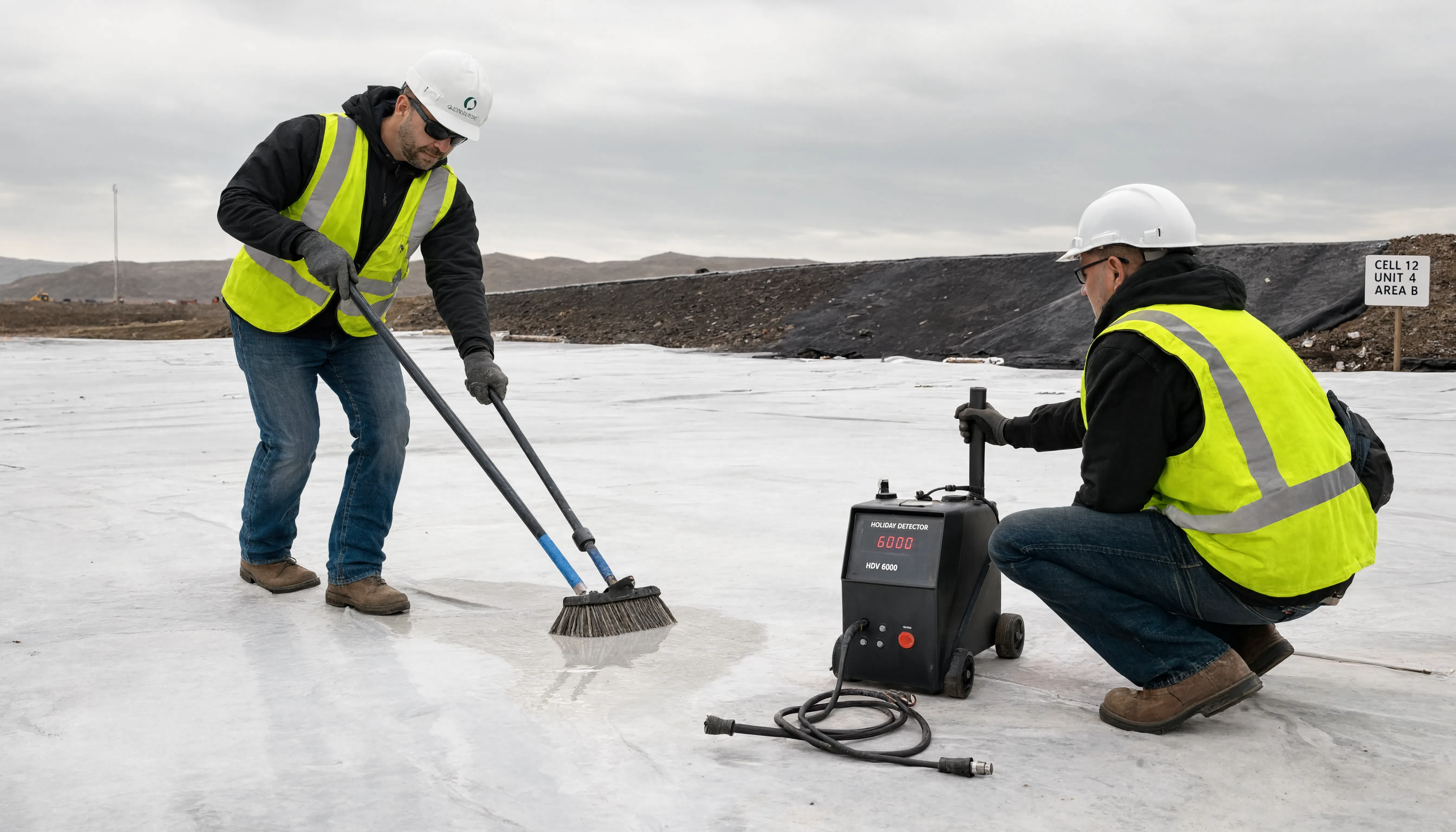
Vacuum box testing is commonly used on extrusion welds and repairs. A soap solution is applied to the test area, and a vacuum box is placed over the seam. If bubbles appear, they may indicate a leak path.
This method is practical for seams and localized repairs, but it is slow for large areas and generally unsuitable for detecting small holes across an entire exposed liner surface. It also requires a relatively clean and accessible test area.
Water Balance and Operational Monitoring
Some facilities attempt to identify leaks through water level monitoring, fluid loss calculations, or operational observations. These methods may indicate that liquid is being lost, but they usually cannot pinpoint the location of holes. They can also be affected by evaporation, rainfall, inflows, withdrawals, temperature, and measurement accuracy.
By the time a leak is suspected through water balance changes, the problem may already have progressed.
Limitations of Traditional Techniques
Traditional methods remain useful, but they have clear limitations when used alone. In many cases, they are better at confirming installation workmanship than identifying every hidden or hard-to-see leak path.
Key limitations include:
- They may miss small holes in the field of the liner
- They may not work once the geomembrane is covered
- They can depend heavily on human observation
- They often focus on seams rather than the entire lined area
- They may be time-consuming over large sites
- They may not provide precise leak location data
- They may not detect damage caused after initial inspection
This is where electrical leak location methods offer major advantages.
What Are Electrical Geomembrane Leak Detection Methods?
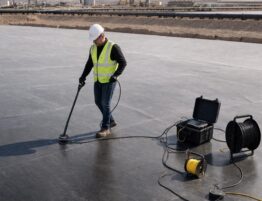
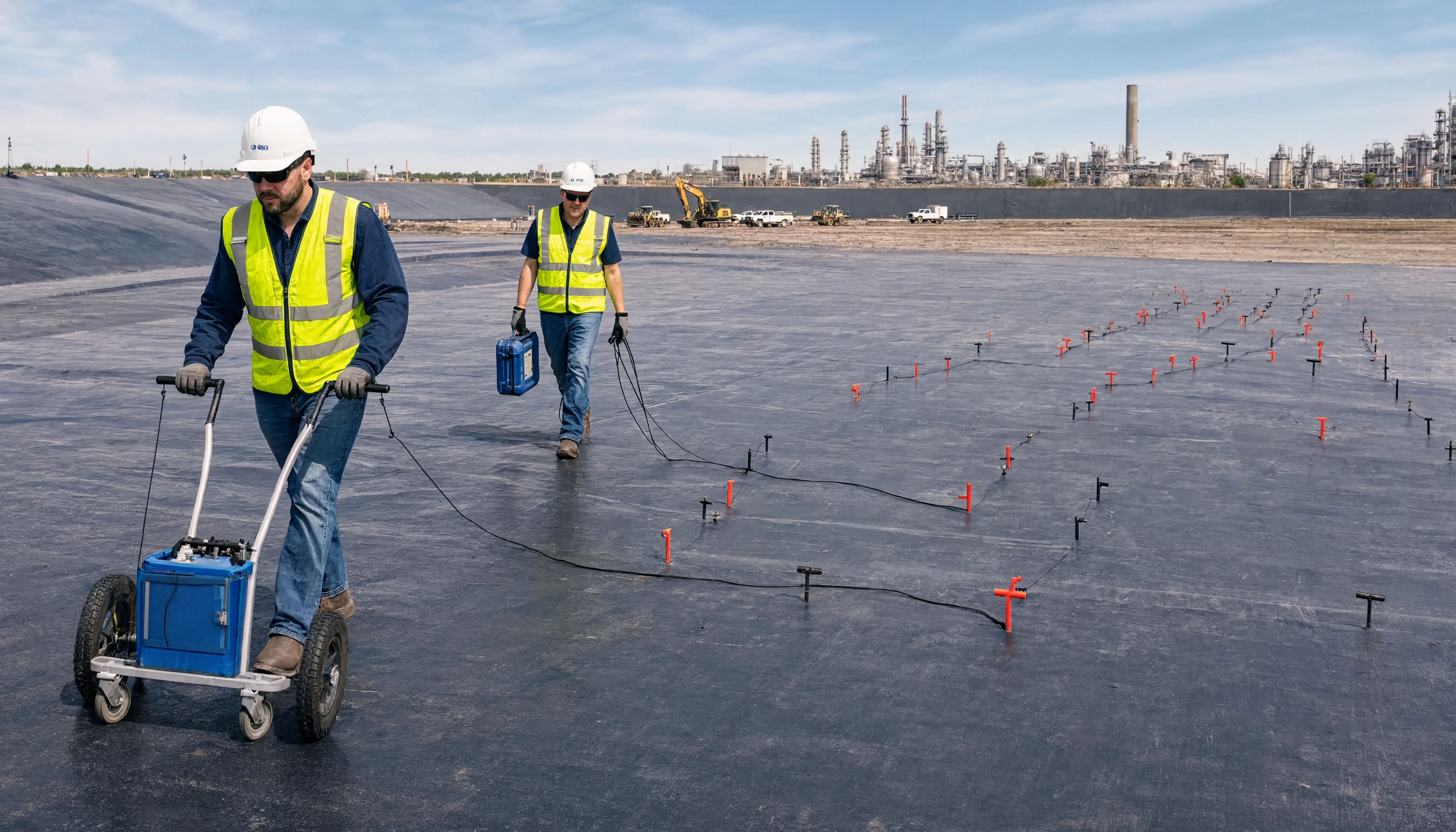
Electrical leak location methods use electrical principles to identify holes, defects, and imperfections in geomembrane liners. Most geomembranes are electrically insulating materials. If there is a hole in the liner, electrical current can pass through that opening between conductive materials or media on opposite sides of the geomembrane.
By applying an electrical signal and measuring voltage patterns across the liner surface or cover material, trained survey crews can locate likely leak points with a high degree of accuracy.
Electrical leak location surveys may be performed on exposed geomembranes or covered geomembranes, depending on the site conditions and system design.
How Electrical Leak Location Works
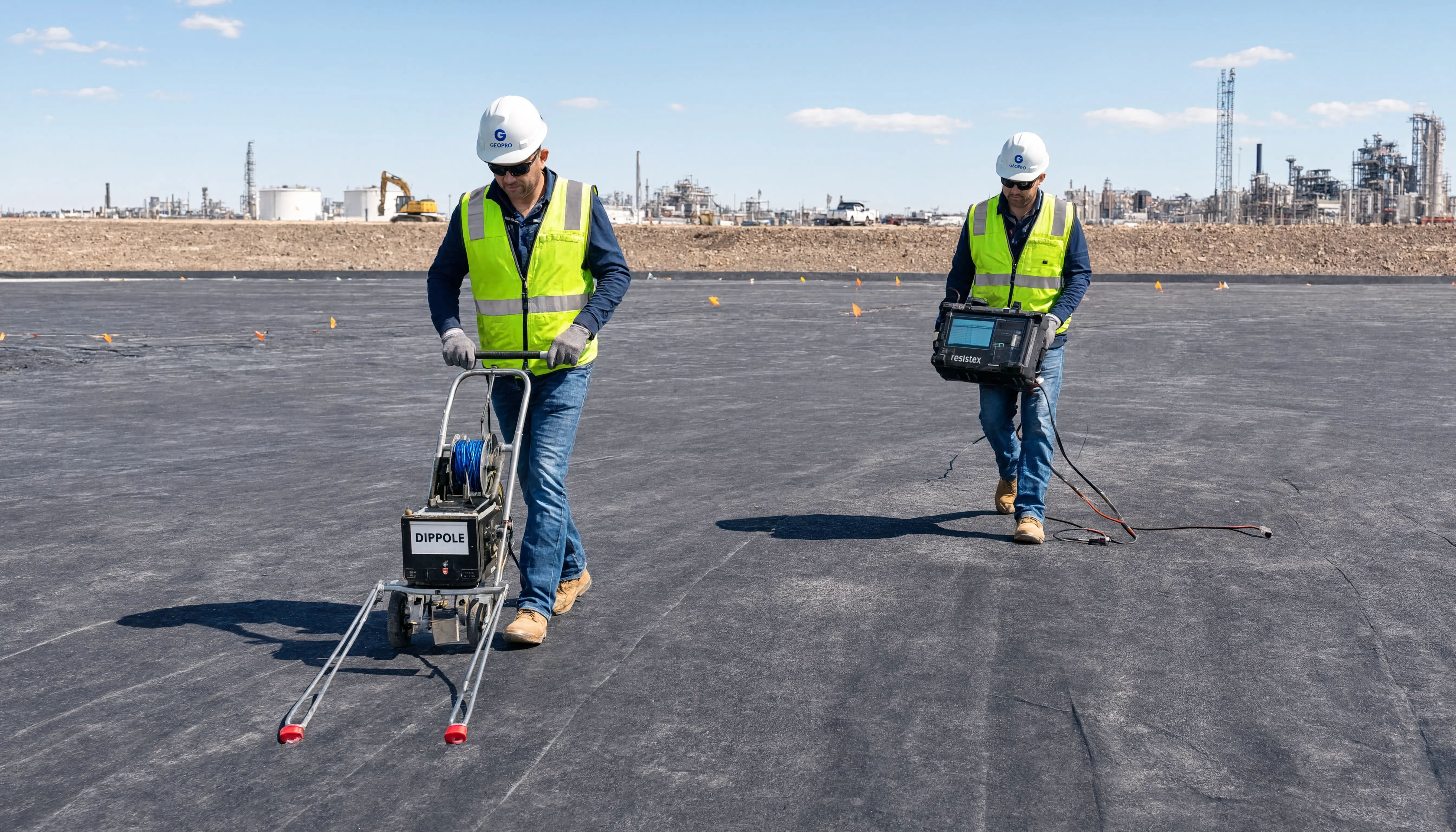
The exact survey setup depends on the project, but the basic concept is straightforward. The geomembrane acts as an electrical barrier. A hole allows current to pass through. Technicians use specialized equipment to identify where that current is escaping.
A typical electrical leak location process may include:
- Establishing an electrical potential across the liner system
- Creating suitable conductive conditions above and below the geomembrane
- Moving survey probes, sensors, or equipment across the test area
- Recording voltage changes or signal responses
- Marking suspected leak locations for repair
- Retesting repaired areas when required
The goal is not merely to determine that a leak exists. The goal is to locate it so it can be repaired efficiently.
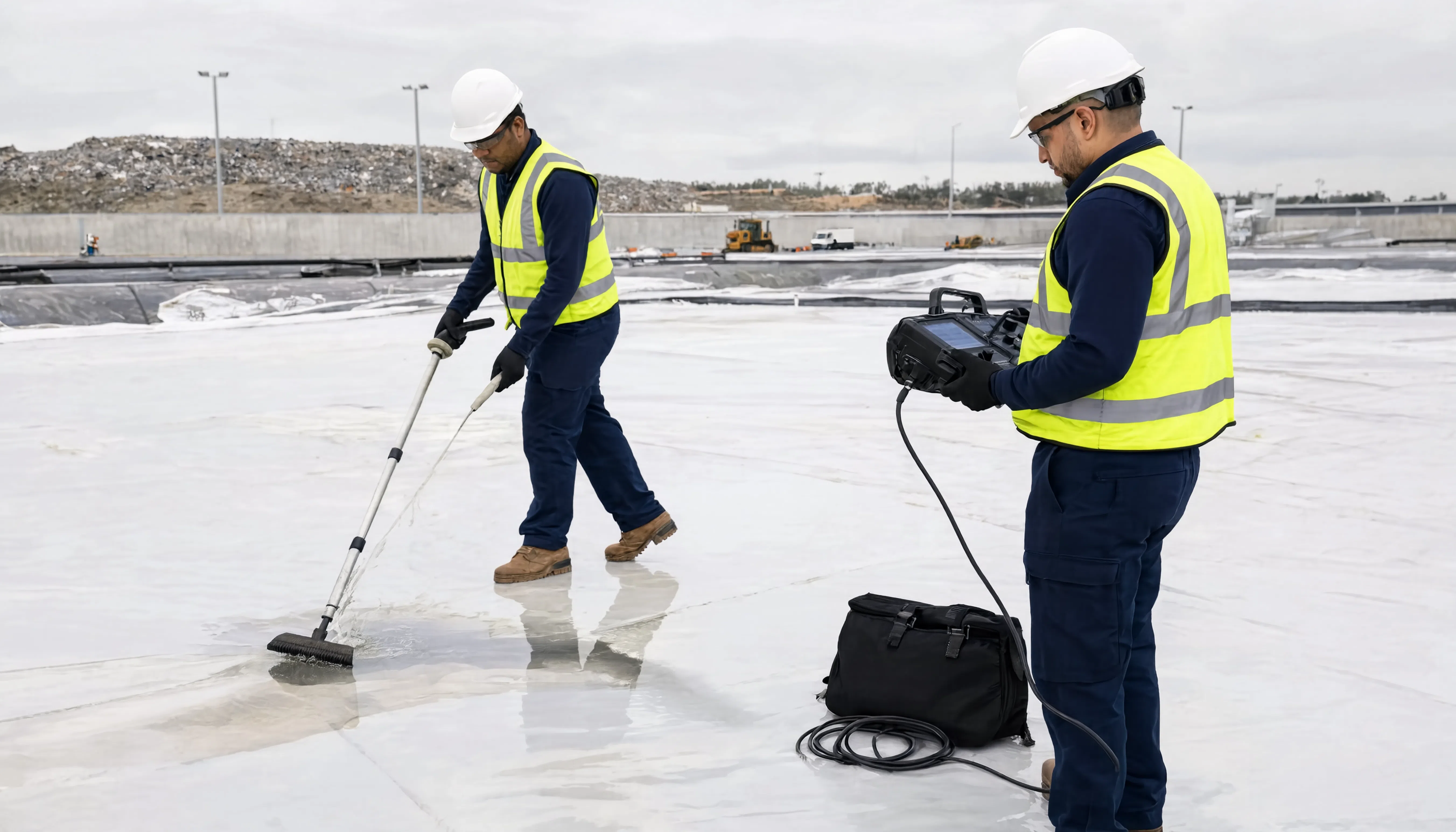
Exposed Geomembrane Electrical Surveys
Exposed geomembrane surveys are performed before the liner is covered with soil, aggregate, waste, or other material. These surveys are often used after installation and before commissioning.
For exposed liners, electrical methods may involve water-based techniques, conductive layers, or specialized equipment suited to the liner configuration. The survey can detect holes that are too small to be found visually and can help confirm that the liner has not been damaged during installation activities.
Exposed surveys are especially useful because defects can often be repaired quickly before additional materials are placed over the geomembrane.
Covered Geomembrane Electrical Surveys
Covered geomembrane surveys are used when the liner has already been covered with soil, drainage gravel, protective layers, waste, or other materials. This is one of the major advantages of electrical leak location.
Traditional visual inspection cannot evaluate a geomembrane once it is buried or covered. Electrical methods, when site conditions are suitable, can identify leak locations beneath cover materials without removing large areas of overburden.
Covered surveys are valuable for:
- Landfills
- Heap leach pads
- Process ponds
- Wastewater lagoons
- Secondary containment systems
- Stormwater and retention ponds
- Reservoirs and impoundments
- Containment systems already in service
The ability to locate holes after cover placement is a major reason electrical methods are widely used in modern containment projects.
Electrical vs. Traditional Techniques
Traditional methods and electrical methods should not always be viewed as competitors. In many projects, they are complementary. Traditional methods support installation quality control, while electrical leak location provides broader detection capability across the geomembrane system.
Detection Capability
Traditional methods are effective for visible defects and seam-related issues. Electrical methods can detect holes that are not visible and may be located away from seams.
Surface Coverage
Visual inspection and seam testing are limited by access and inspection scope. Electrical surveys can evaluate large areas of geomembrane more systematically, including field areas where damage often occurs.
Covered Liner Assessment
Traditional techniques are generally limited once the liner is covered. Electrical leak location can often be used after cover material has been placed, provided the system is designed and prepared for survey conditions.
Accuracy of Leak Location
Water balance methods may suggest leakage, but typically cannot identify precise locations. Electrical surveys are designed to locate the source so repairs can be targeted.
Practical Project Value
Traditional inspections help reduce installation defects. Electrical surveys help identify holes that may otherwise remain hidden. Together, they can reduce repair costs, limit environmental risk, and support regulatory confidence.
Advantages of Electrical Leak Location Surveys
Electrical leak location is widely used because it offers practical benefits that traditional techniques cannot always provide.
Major advantages include:
- Finds small holes that may not be visible
- Surveys large areas efficiently
- Can work on exposed or covered geomembranes
- Helps reduce unnecessary excavation
- Supports targeted repairs
- Provides useful documentation for owners, engineers, and regulators
- Can identify damage from construction activities after liner installation
- Helps protect long-term containment performance
Electrical surveys are especially valuable when project consequences are high, such as in mining, waste containment, water storage, industrial containment, and environmental protection applications.
When Traditional Methods Are Still Useful
Traditional methods should not be dismissed. They are still important during geomembrane installation and construction quality assurance. Visual inspection can catch obvious problems early. Seam testing verifies weld quality. Destructive testing provides data on seam strength. Vacuum box testing helps evaluate extrusion welds and repairs.
The issue is not whether traditional techniques have value. They do. The issue is whether they are enough on their own. For many modern containment projects, relying only on traditional inspection can leave small holes undetected.
Choosing the Right Method for Your Project
The best geomembrane leak detection approach depends on the project type, liner material, exposure conditions, cover material, regulatory requirements, site access, and consequences of leakage.
Project teams should consider:
- Is the geomembrane exposed or covered?
- Has cover material already been placed?
- Is the liner system designed to support electrical leak location?
- Are conductive conditions suitable above and below the liner?
- What type and thickness of geomembrane is being used?
- What are the regulatory or owner requirements?
- What are the consequences if a leak is missed?
- Are repairs needed before commissioning?
For many projects, the strongest approach is a combination of traditional construction quality assurance and electrical leak location surveys.
Best Practices for Reliable Leak Detection
To get the best results from geomembrane leak detection, planning matters. Electrical surveys are most effective when the liner system is designed with testing in mind.
Best practices include:
- Involve leak detection specialists early in design or construction planning
- Prepare the subgrade and cover materials properly
- Remove debris, sharp objects, and unnecessary obstacles
- Maintain suitable moisture or conductive conditions when required
- Keep accurate records of panel layout, seams, repairs, and penetrations
- Survey after major construction activities that could damage the liner
- Repair and retest located holes as needed
- Use experienced survey technicians and proven equipment
A well-planned survey can save time, reduce uncertainty, and help prevent larger problems after the facility is placed into operation.
FAQ
What are the main geomembrane leak detection methods?
The main methods include visual inspection, seam testing, vacuum box testing, spark testing, water balance monitoring, and electrical leak location surveys. Electrical methods are often used to locate holes that traditional methods may miss.
Can electrical leak location find holes under soil or gravel?
Yes, in many cases, electrical leak location can be performed on covered geomembranes. Site conditions, liner design, moisture, cover type, and electrical setup all affect whether a covered survey is suitable.
Are traditional geomembrane inspection methods still needed?
Yes. Traditional methods are useful during installation, especially for visual checks, seam evaluation, and repair verification. However, they may not detect small holes across the full liner area.
Is visual inspection enough to confirm that a geomembrane has no holes?
No. Visual inspection can identify obvious defects, but small punctures, hidden holes, and damage under cover material can be missed. Electrical leak location provides a more advanced method for finding many of these issues.
When should an electrical leak location survey be performed?
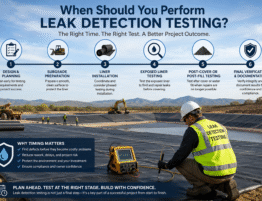
Electrical surveys are commonly performed after liner installation, before cover placement, after cover placement, after construction activities, or when leakage is suspected. The right timing depends on the project and site conditions.
What types of facilities use electrical leak location surveys?
Electrical leak location is used for landfills, mining facilities, wastewater ponds, reservoirs, secondary containment areas, industrial ponds, heap leach pads, and other lined containment systems.
Can all geomembranes be tested electrically?
Not always. Electrical testing depends on liner material, system design, site conditions, accessibility, and conductivity above and below the liner. A qualified leak location provider can determine whether a survey is appropriate.
What happens after holes are found?
Located holes are typically marked, documented, repaired by qualified personnel, and retested when required. This process helps confirm that repairs have addressed the identified problem areas.
Partner With Leak Location Services, Inc.
Electrical leak location is one of the most effective ways to find geomembrane holes, defects, and imperfections that traditional techniques may miss. For owners, engineers, contractors, and facility operators, the right survey can reduce risk, support compliance, and protect valuable containment systems.
We are an international company specializing in Electrical Leak Location Surveys of Geomembranes. With more than 33 years of experience, we deliver first-class surveys for clients worldwide across a wide range of containment applications.
To learn more about professional geomembrane electrical leak location services, contact us today and connect with a team trusted for accurate, experienced, and dependable survey support.