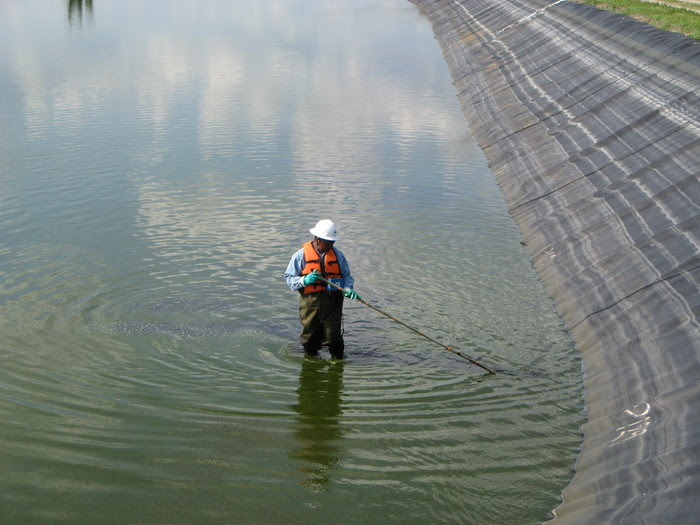
If you rely on a geomembrane liner, you already understand how critical it is to your operation. Whether you manage a landfill, pond, wastewater facility, or industrial containment system, that liner is your first and most important line of defense against leaks, contamination, and costly environmental issues. But here is the reality: even the highest-quality liners can develop defects over time. Installation challenges, environmental stress, and simple wear-and-tear can all lead to leaks that are not always visible to the naked eye.
That is exactly where geomembrane leak detection comes into play. At our core, we believe leak detection is not just a maintenance step. It is a proactive strategy that protects your investment, ensures compliance, and gives you peace of mind. In this guide, we will walk you through how leaks form, how they are detected, and what best practices you should follow to keep your containment system performing at its best.
Understanding Geomembrane Liners and Their Purpose
Geomembrane liners are engineered barriers designed to prevent liquids from escaping containment systems. They are commonly used in:
- Landfills
- Wastewater treatment facilities
- Mining operations
- Agricultural ponds and lagoons
- Industrial containment systems
These liners are typically made from materials like HDPE, LLDPE, PVC, or EPDM. Each material offers durability and chemical resistance, but none are completely immune to damage.
Even a pinhole-sized defect can allow liquids to escape, which can lead to contamination, regulatory violations, and expensive remediation efforts. That is why early detection is so important.
How Leaks Develop in Geomembrane Liners
Before diving into detection methods, it helps to understand how leaks happen in the first place. In our experience, leaks often originate from a handful of common issues.
Installation Defects
Even with skilled crews, installation is one of the most vulnerable stages. Issues like poor seam welding, wrinkles, or debris beneath the liner can create weak points.
Mechanical Damage
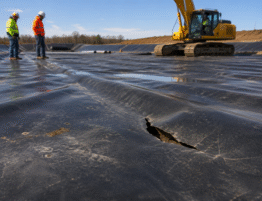
Heavy equipment, dropped tools, or sharp objects can puncture the liner during or after installation. These defects are often small but highly problematic.
Environmental Stress
Temperature fluctuations, UV exposure, and ground movement can all affect liner integrity over time. Expansion and contraction may lead to stress cracks or seam separation.
Material Degradation
Although geomembranes are designed to last, long-term exposure to chemicals or environmental conditions can slowly degrade the material.
Understanding these risks helps guide a smarter, more proactive approach to geomembrane leak detection.
Why Geomembrane Leak Detection Is Essential
Let us be direct. Waiting until you see visible signs of a leak is already too late. By that point, damage may have already spread beyond the containment system.
That is why we always emphasize early and routine testing. Here is what effective leak detection helps you achieve:
- Prevent environmental contamination before it occurs
- Avoid costly repairs and regulatory penalties
- Extend the lifespan of your liner system
- Maintain compliance with environmental standards
- Protect surrounding soil and groundwater
Leak detection is not just about finding problems. It is about preventing them from escalating.
Proven Methods for Detecting Leaks
There is no one-size-fits-all approach to geomembrane leak detection. The right method depends on your system, liner type, and whether the liner is covered or exposed. That said, several proven techniques consistently deliver accurate results.
Electrical Leak Location Surveys
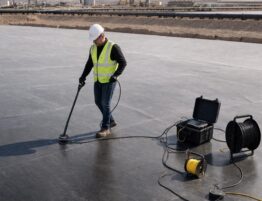
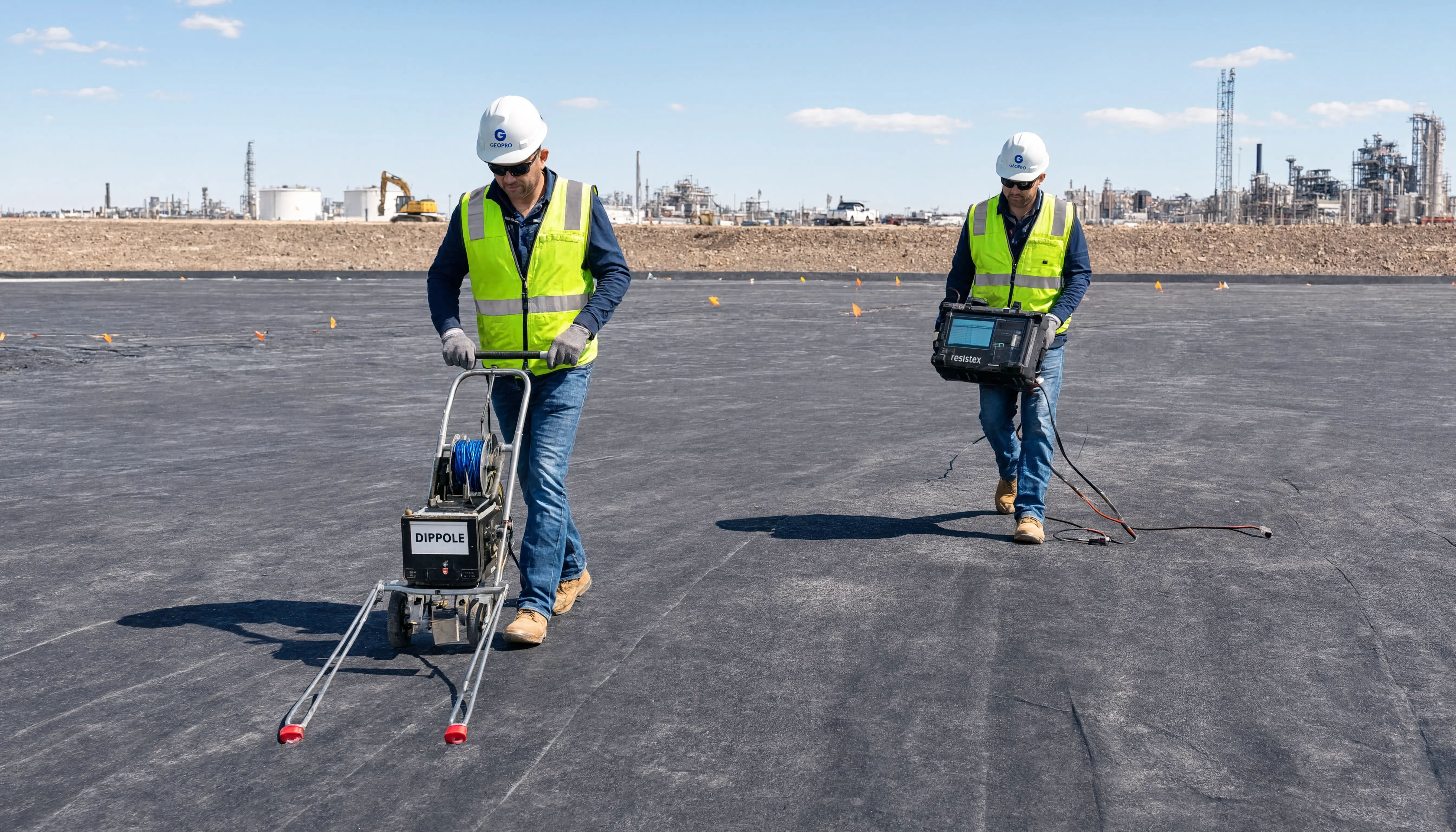
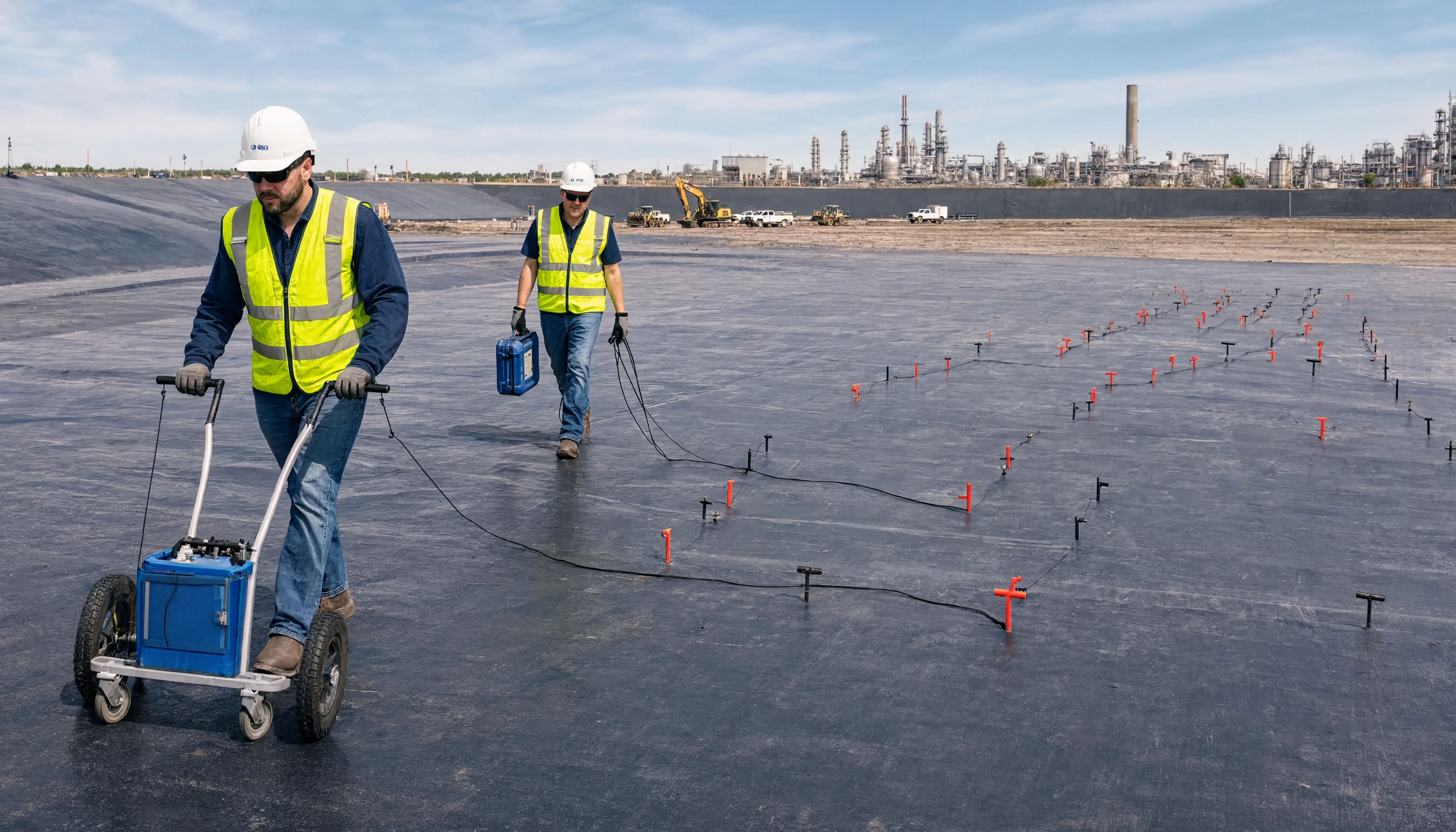
This is one of the most effective and widely used methods in the industry. Electrical testing works by applying a voltage across the liner surface.
When there is a defect, the electrical current passes through the hole and into the conductive material below. This allows technicians to pinpoint the exact location of even the smallest leaks.
We rely heavily on this method because of its precision and reliability, especially for newly installed liners.
Spark Testing
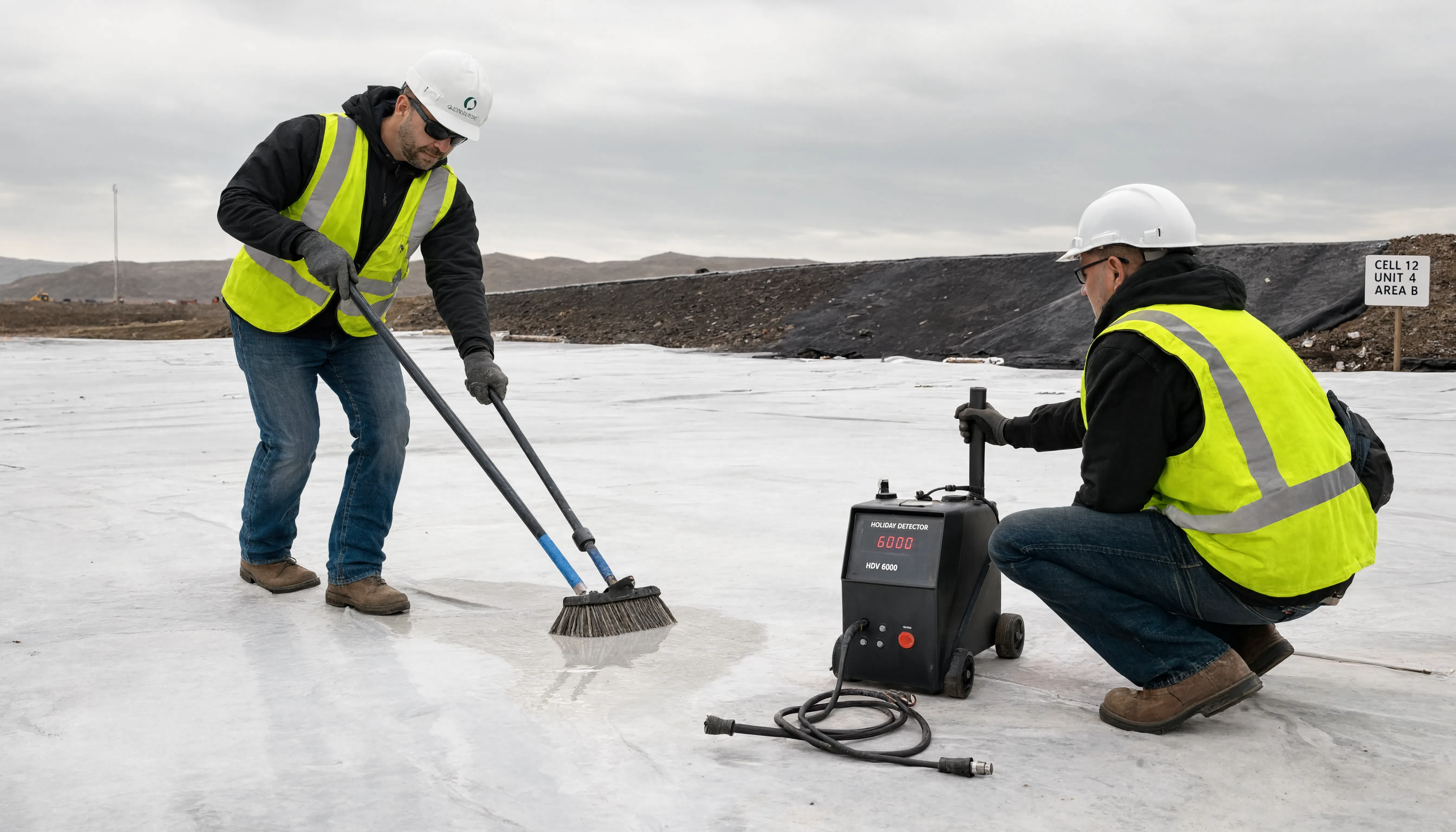
Spark testing is typically used for exposed geomembrane liners. A high-voltage probe is passed over the liner surface.
If there is a hole or defect, a spark will jump through the opening, indicating the location of the issue. This method is ideal for quality assurance during installation.
Water-Based Surveys
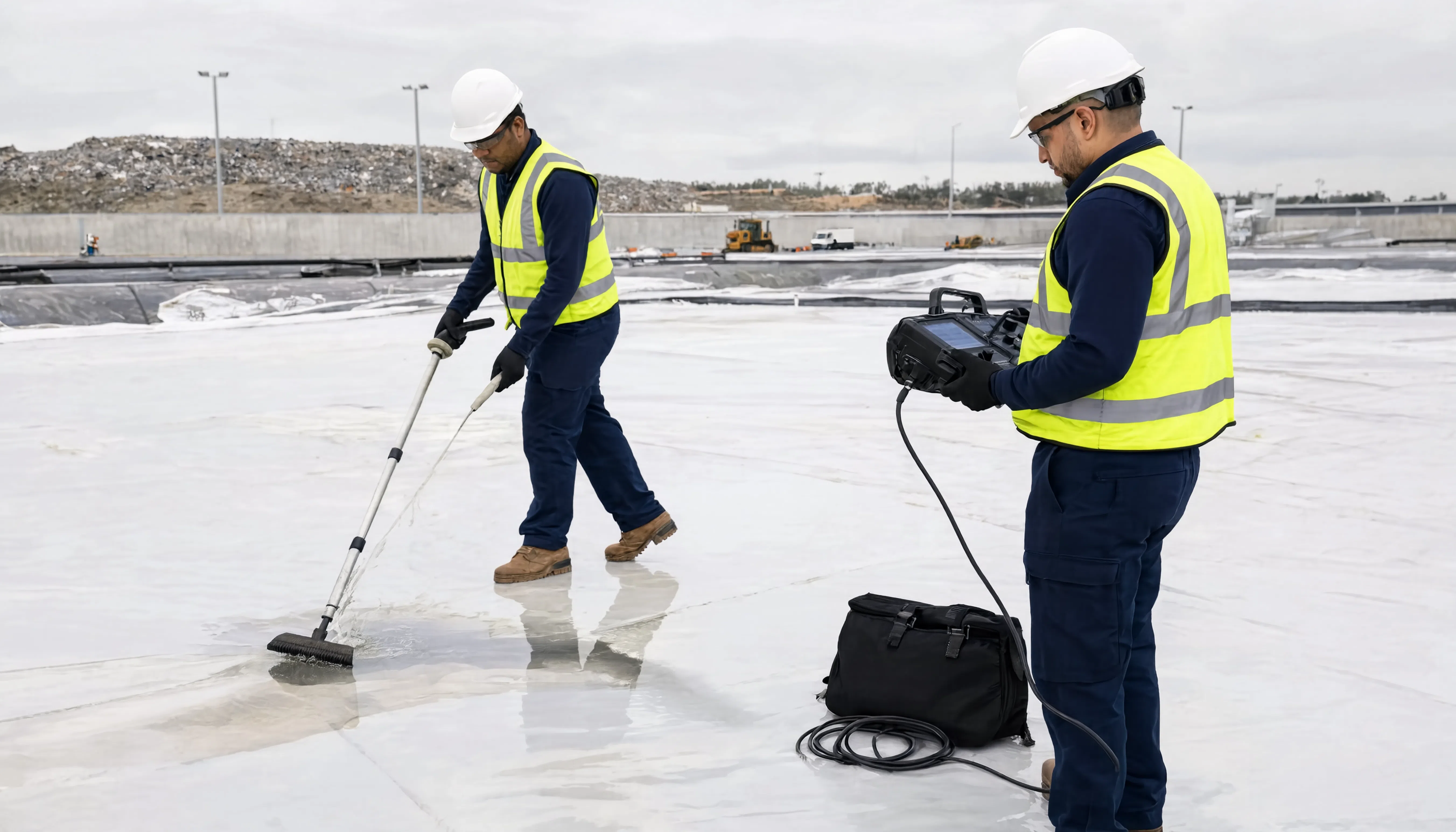
For liners that are already covered or submerged, water-based electrical surveys are often used. These tests use water as a conductive medium to identify leaks.
This approach is especially useful for ponds, lagoons, and other liquid-filled systems.
Vacuum Box Testing
This method is commonly used for seam testing. A vacuum box is placed over a seam, and a solution is applied.
If bubbles form, it indicates a leak in the seam. This is a great way to verify weld integrity during installation.
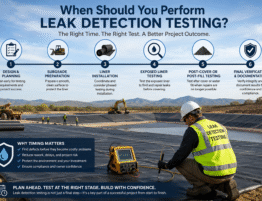
Step-by-Step Approach to Effective Leak Detection
From our perspective, successful leak detection is not just about the tools. It is about following a structured process that leaves no room for guesswork.
Site Preparation
Before testing begins, the site must be properly prepared. This includes clearing debris, ensuring proper moisture conditions, and confirming that the liner is accessible.
Method Selection
Choosing the right detection method is critical. Factors like liner type, coverage, and environmental conditions all play a role.
Testing Execution
Once everything is in place, testing is conducted systematically. Every section of the liner is evaluated to ensure full coverage.
Data Analysis
After testing, results are carefully analyzed. Any anomalies or signals are investigated to confirm whether they indicate actual defects.
Repair and Verification
When a leak is found, it is repaired immediately. Follow-up testing is then conducted to confirm that the issue has been fully resolved.
This step-by-step approach ensures nothing is overlooked.
Common Challenges in Leak Detection
Even with advanced technology, geomembrane leak detection comes with its challenges. We encounter these regularly and have learned how to navigate them effectively.
Limited Access
Covered liners or submerged systems can make access difficult. Specialized methods are required to test these areas accurately.
Environmental Conditions
Wind, moisture, and temperature can all impact testing accuracy. Proper planning helps minimize these effects.
Complex System Designs
Multi-layer systems or irregular shapes can complicate testing. Experience is key in adapting techniques to fit the situation.
Overcoming these challenges requires both technical expertise and hands-on experience.
Best Practices for Long-Term Leak Prevention
While detection is critical, prevention is just as important. Over the years, we have identified several best practices that help reduce the risk of leaks.
- Conduct testing immediately after installation
- Schedule routine inspections throughout the liner’s lifespan
- Use high-quality materials and certified installers
- Avoid unnecessary traffic or heavy equipment on liners
- Address small issues before they become major problems
By combining prevention with detection, you create a stronger, more reliable containment system.
The Role of Professional Geomembrane Leak Detection Services
You might be wondering if leak detection can be handled in-house. While basic inspections can be performed internally, specialized testing requires professional expertise.
Working with experienced providers offers clear advantages:
- Access to advanced equipment and proven methodologies
- Highly trained technicians who understand complex systems
- Accurate identification of even microscopic defects
- Detailed reporting for compliance and documentation
- Faster resolution of issues
When it comes to protecting your system, precision matters. That is why professional geomembrane leak detection services are such a valuable investment.
Frequently Asked Questions
What is geomembrane leak detection?
Geomembrane leak detection is the process of identifying defects or holes in liner systems that could allow liquids to escape. It uses advanced techniques such as electrical testing and spark testing.
How small of a leak can be detected?
Modern methods can detect extremely small defects, often as small as a pinhole, depending on site conditions and testing method.
When should leak detection be performed?
Testing should be conducted during installation, after installation, and periodically throughout the life of the liner.
Is leak detection required for compliance?
In many cases, yes. Regulatory agencies often require testing to ensure environmental protection standards are met.
Can leaks be repaired easily?
Most leaks can be repaired quickly once identified. The key is detecting them early before they cause larger issues.
Protect Your Investment with a Trusted Partner
At the end of the day, your geomembrane liner is only as reliable as the care and attention it receives over time. Leak detection is not just a technical task tucked into a maintenance checklist. It is a critical safeguard that protects your operations, your surrounding environment, and your long-term investment. By taking a proactive approach and incorporating routine geomembrane leak detection into your strategy, you position your system for lasting performance and fewer surprises down the road.
If you are looking for a trusted, experienced partner to help you stay ahead of potential issues, Leak Location Services is here to help. With decades of experience and a strong reputation across industries, Leak Location Services specializes in precise, reliable liner testing for a wide range of containment systems. Their team uses advanced technologies and proven methods to identify leaks quickly and accurately, helping you avoid costly repairs and maintain compliance with confidence.