
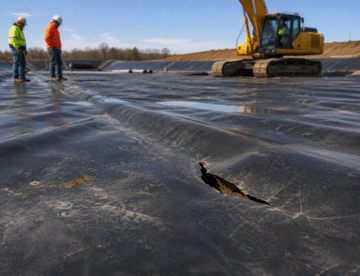
Geomembrane damage is one of the most common and costly issues that can occur during the construction of containment systems. While geomembranes are engineered to provide durable, low-permeability barriers, their long-term performance depends heavily on careful installation, site control, protection, and verification. Even a small puncture, tear, wrinkle, abrasion, or seam-related imperfection can create a…
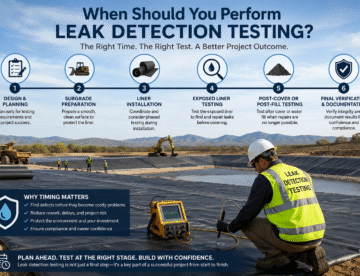
Understanding when to perform leak detection testing is essential for any project that relies on geomembranes to contain liquids, waste, chemicals, process water, or other materials. Leak detection testing is not just a final checkpoint before a project is turned over. It is a strategic quality control step that can help identify defects, imperfections, and…
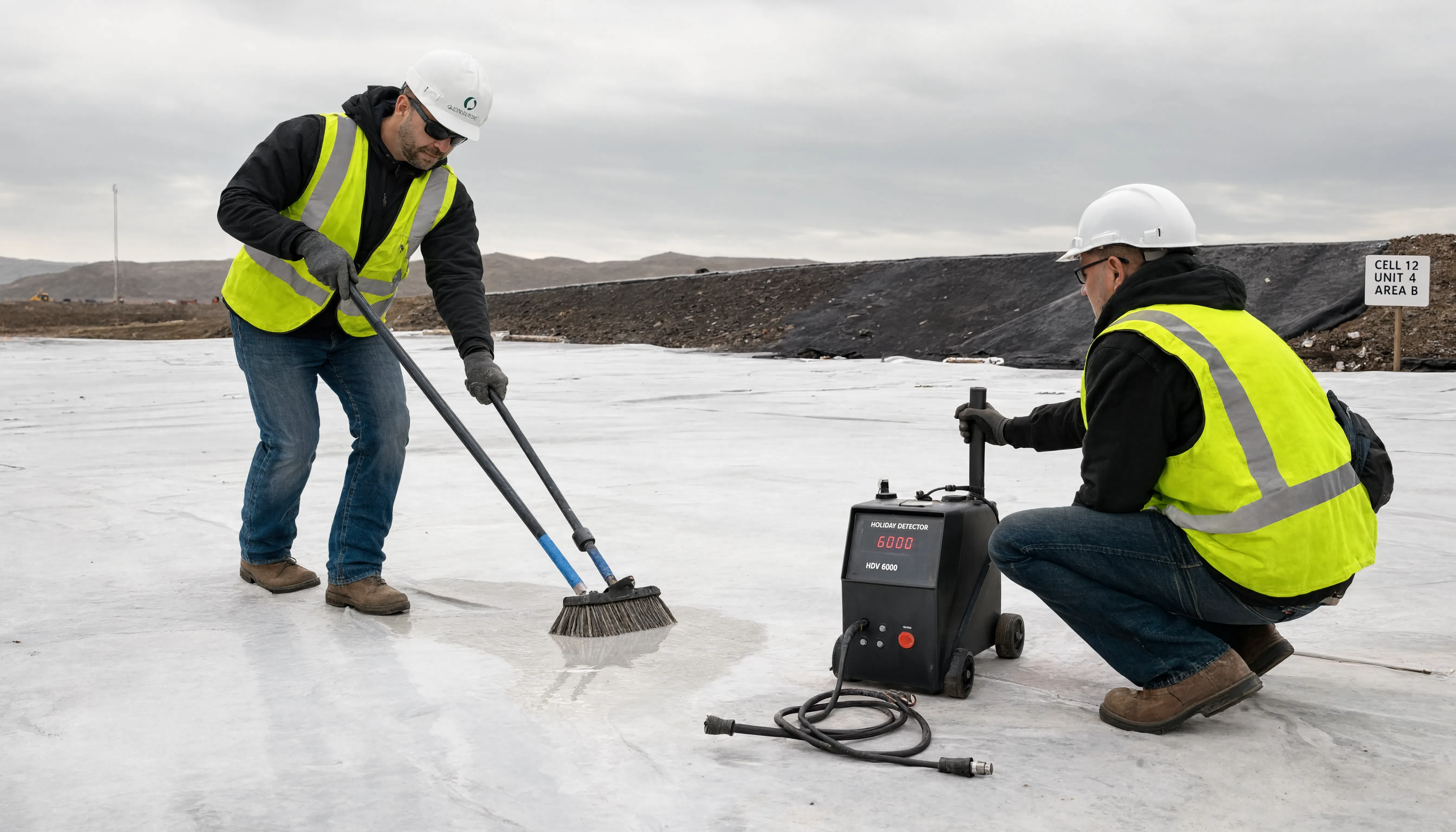
Electrical leak location is a specialized testing method used to detect holes, defects, and imperfections in installed geomembrane liners. These liners are commonly used in landfills, ponds, reservoirs, mining facilities, wastewater containment systems, secondary containment areas, and other environmental protection applications. When a liner is installed, even small holes can allow liquids to escape or…
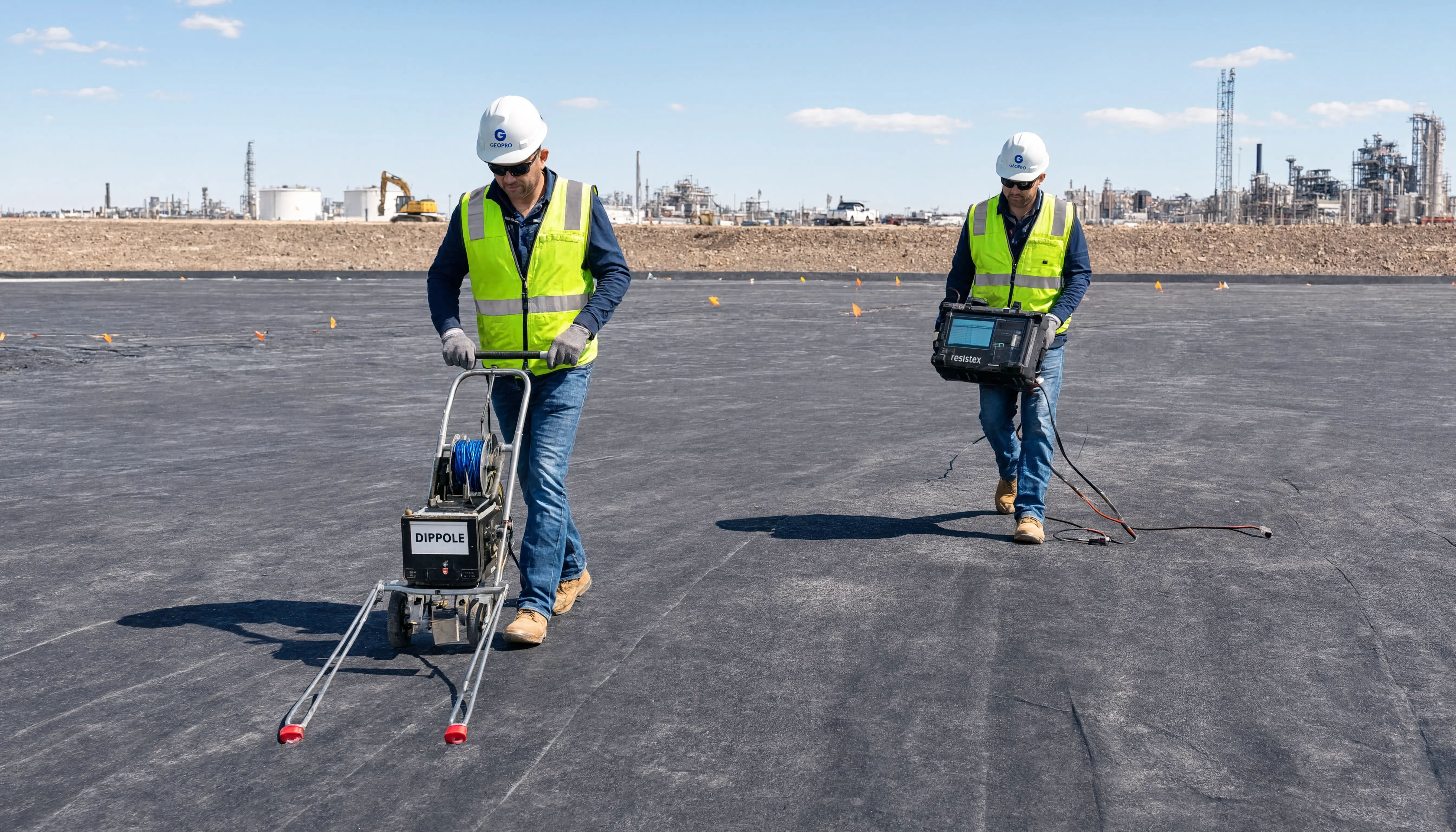
When containment systems are designed to protect soil, groundwater, liquids, waste materials, or valuable process fluids, choosing the right geomembrane leak detection method is essential. Geomembranes are used in landfills, ponds, reservoirs, mining facilities, wastewater treatment plants, secondary containment systems, and many other critical applications. Even when geomembranes are installed by experienced crews, defects, imperfections,…